Audio Compression: Taming Dynamics
A compressor is an automatic volume control. When a sound gets louder than a set threshold, the compressor turns it down so quiet details and loud peaks sit closer together. Set threshold, ratio, knee, attack, release, and level-matched makeup gain; compare VCA, FET, optical, multiband, and sidechain designs; and blend dry punch with crushed sustain using parallel compression.
1. Compressor workbench
The left graph is the compressor's transfer curve: input level across, output level up. The right graph shows the same sound over time: the input, the output, and how much the compressor turned it down (gain reduction). Press Play and toggle Bypass to compare before and after.
2. The six controls, and the rest of the front panel
Threshold
The level where compression starts. Sound below the threshold passes through unchanged. Lower the threshold and more of the sound gets compressed.
Ratio
How strongly the compressor turns down sound above the threshold. At 4:1, a signal 8 dB over the threshold comes out only 2 dB over. At 1:1 nothing changes.
Knee
How gradually compression starts. A hard knee starts it all at once at the threshold. A soft knee eases in across a range of levels, so it's harder to hear.
Attack
How quickly the compressor reacts once the sound crosses the threshold. A slow attack lets the first hit of a drum through before it clamps down, which keeps the punch.
Release
How quickly the compressor lets go once the sound drops back down. Too fast and it can flutter or distort. Too slow and it's still turning down the next quiet note.
Makeup gain
Compression makes the loud parts quieter, so the whole track ends up quieter. Makeup gain turns everything back up afterward. Always compare at equal loudness: louder almost always sounds "better" at first.
More controls you'll meet on real compressors
Input & output (fixed threshold)
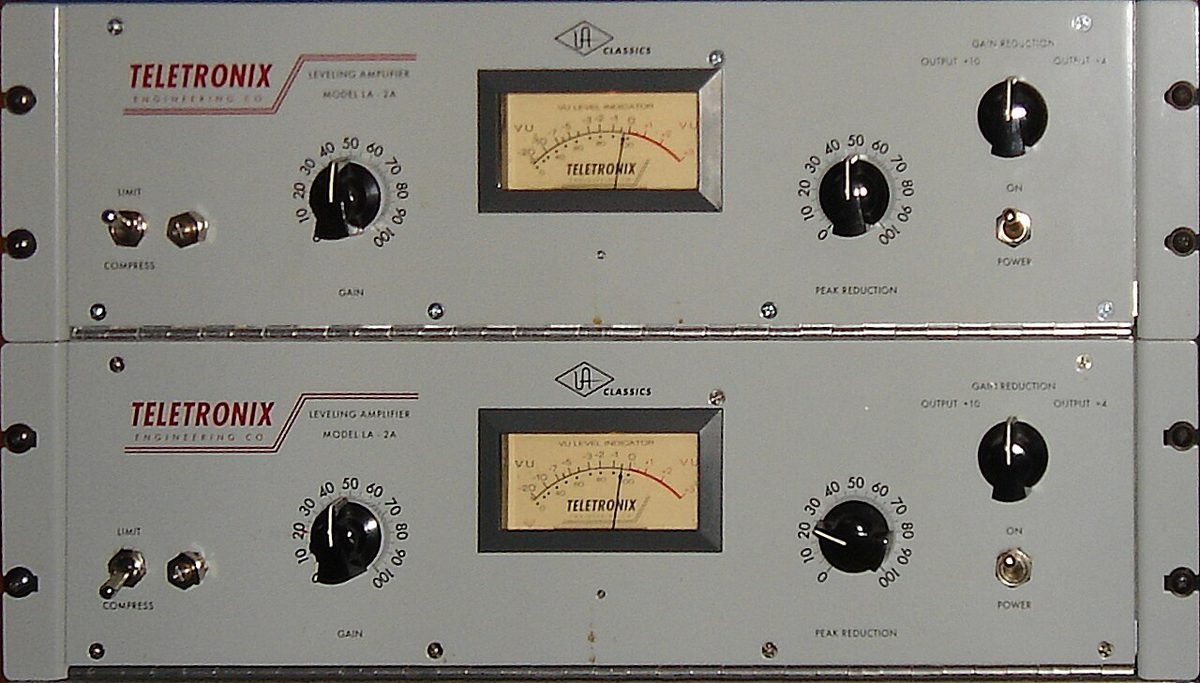
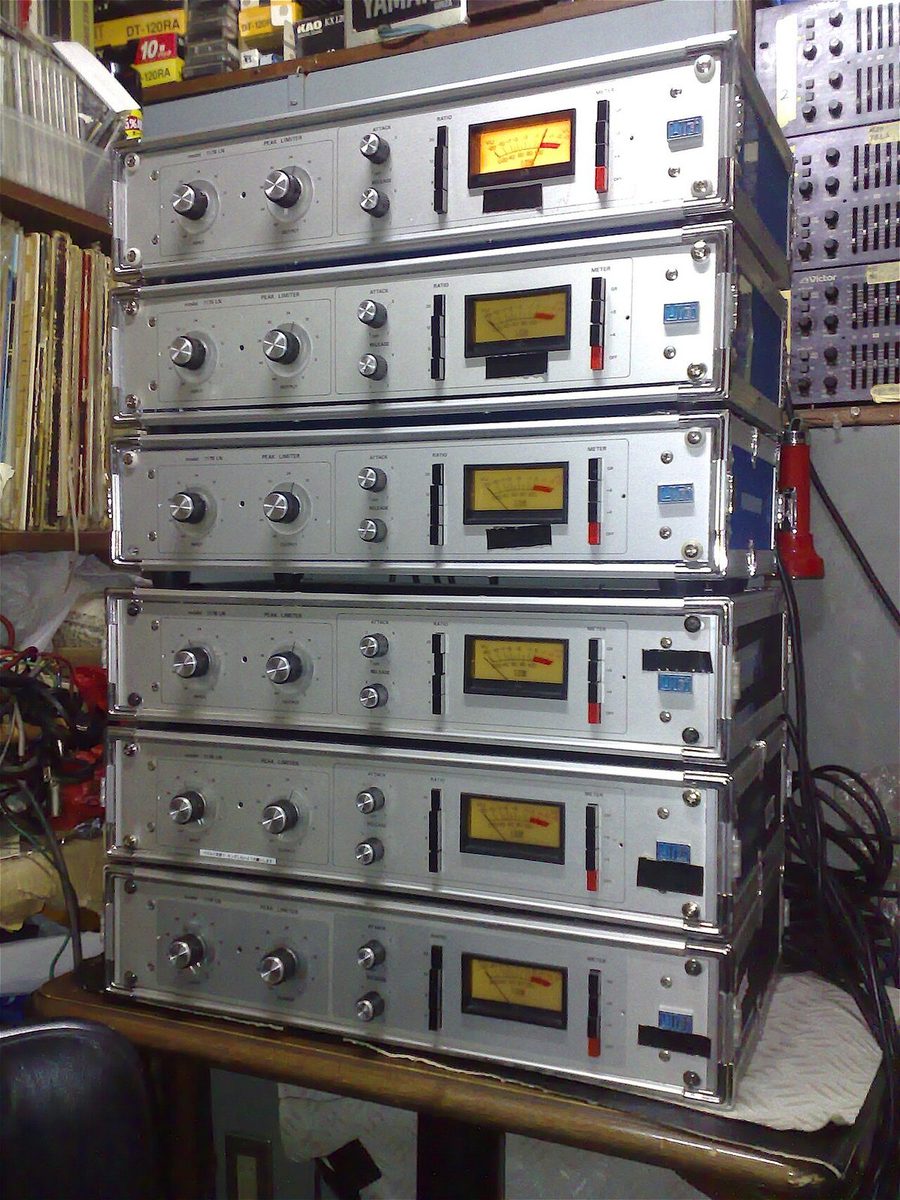
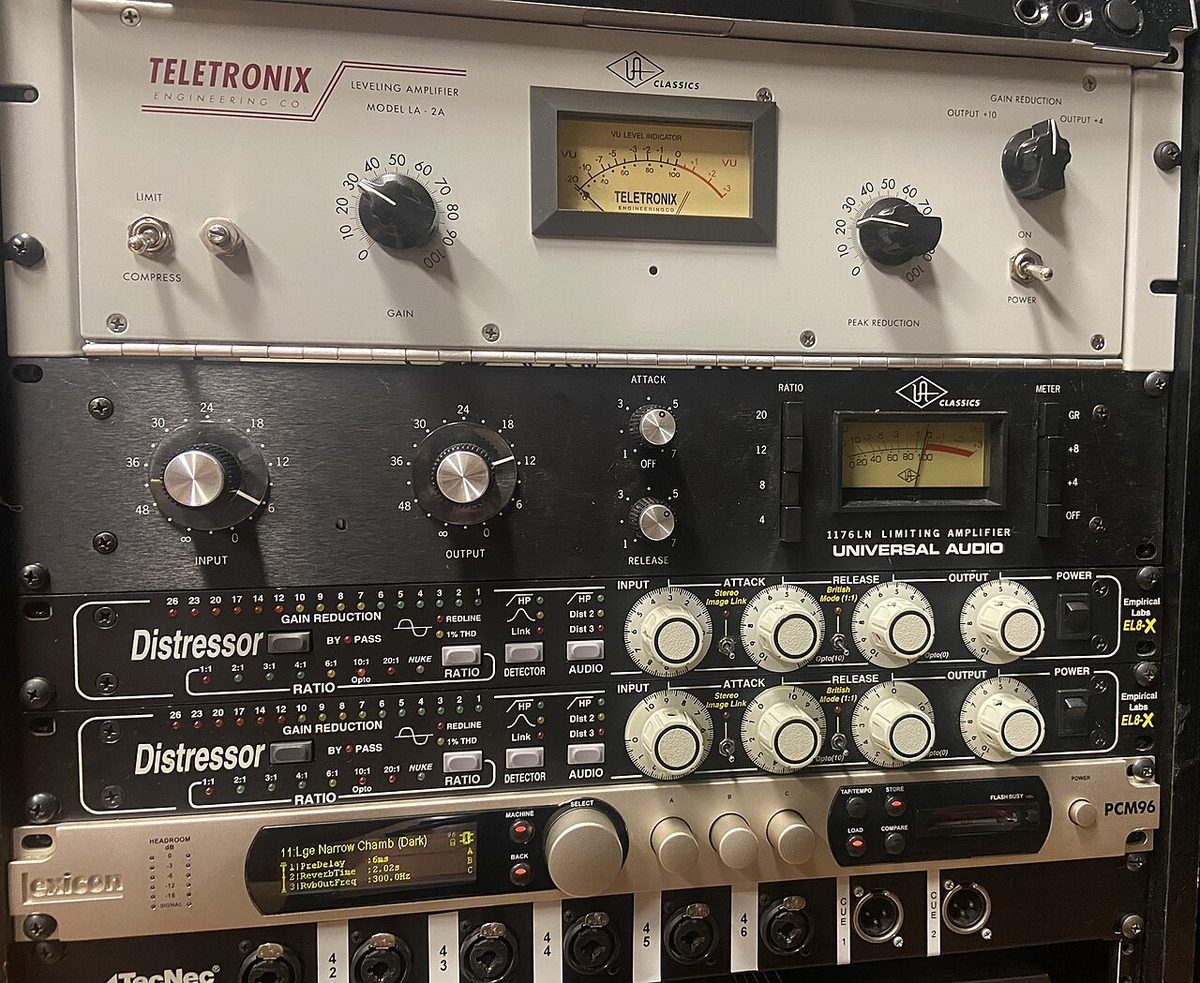
Many classic units (the 1176, and the LA-2A's Peak Reduction) have no threshold knob. The threshold is fixed, so turning up the input pushes more of the signal over it, and the output knob is the makeup gain.
Sidechain filter (SC HPF)
A high-pass filter on what the compressor listens to, not on what you hear. It stops a big kick or bass note from pumping the whole mix bus.
Mix (wet/dry)
Blends the compressed signal with the untouched one inside the box. That's parallel compression in one knob (see section 7).
Detection: peak or RMS
Peak detection reacts to every spike (catches drums). RMS reacts to the average loudness, more like your ear does (smooth on vocals and buses).
Stereo link
On a stereo compressor, both sides turn down together. Unlinked, a loud hit on the left pulls the image to the right.
Gain-reduction meter
The most important "control" is the needle. Read it on every phrase: 3–6 dB on the loud parts is a lot more than it sounds.
3. Engineer challenges
A. Even out the singer
The vocalist whispers one phrase and belts the next. Make the phrases sit together: output range ≤ 10 dB, peak gain reduction ≤ 15 dB (don't crush it), and the loudest output between −6 and 0 dBFS.
B. Keep the drum punch
The drummer wants the kit controlled, not flattened. Get 3–10 dB of peak gain reduction while letting the first hit through: attack ≥ 20 ms. Listen for the "smack" at the start of each hit.
C. Build a brickwall limiter
A limiter is a compressor with a very high ratio and a very fast attack, used to guarantee nothing goes above a ceiling. Protect the stream: ratio 20:1, knee ≤ 3 dB, attack ≤ 1 ms, output peak ≤ −1 dBFS, with the threshold no lower than −12 dB so the music keeps its life.
4. Do the math
Above the threshold, only a fraction of the overshoot comes out:
output = threshold + (input − threshold) ÷ ratio 5. Hear the mistakes
Pumping
With a low threshold and fast release on drums, the whole mix swells back up between hits. Try threshold −40, ratio 10:1, release 60 ms.
Dull transients
With a very fast attack, the front edge of each hit gets clamped and drums go soft. Try attack 0 ms on the drum loop, then 30 ms.
Noise lift
Heavy compression plus makeup gain also turns up breaths, room hum, and hiss in the quiet gaps. Compression can't tell the music from the noise.
Loudness trap
Pushing makeup gain feels exciting because louder sounds better. Bypass at matched loudness before deciding compression actually helped.
6. Level matching: EQs and compressors
Your ears have a bias: louder sounds better. Even 1 dB louder reads as "fuller, clearer, more exciting." Boost an EQ or add makeup gain and the processed version almost always wins a quick A/B because it's louder, not because it's better. Level matching means setting the processed signal to the same perceived loudness as the original before you compare.
Compressors
Set makeup gain so that bypass on and off are equally loud. Compare a few times with your eyes closed (or have a partner flip the bypass). If you can't tell which is which, the compressor isn't doing anything you need.
EQs
A boost raises the level, a cut lowers it. Use the EQ's output gain to match, then A/B. A good habit: cut more than you boost, so you don't fool yourself with loudness.
Use the meters, then your ears
Match peaks or loudness (LUFS) on the meter first, then fine-tune by ear, because a compressed signal can have lower peaks and still sound louder.
Why it matters downstream
An unmatched plug-in changes the level into everything after it in the chain (the next compressor's threshold, the bus, the print). Matched processors keep your gain staging the same as it was.
Try it: in the workbench above, set a 4:1 compressor, then raise makeup gain until Bypass on and off sound equally loud. Now judge whether the compression actually helped.
7. Serial and parallel processing
Serial processing runs a signal through processors one after another, so each one hears the result of the one before. Parallel processing splits the signal, processes one copy, and blends it back with the untouched original.
Serial: order matters
EQ → compressor: cut the boomy low end first so the compressor doesn't react to it. Compressor → EQ: brighten after, so the compressor doesn't clamp on the boost. Two gentle compressors in series (say 3 dB each) often sound more natural than one working hard for 6 dB.
Parallel: keep the punch, add the body
New York compression: send the drums to a bus, compress that copy hard, and tuck it under the dry drums. The dry copy keeps the transients; the squashed copy lifts the quiet detail and room. Reverb and delay on FX sends are parallel processing too.
8. Meet the hardware
The compressor in this lab is software, but its controls come from boxes like these. Match each photo to a row of Kinds of compressors: which one is optical, and which is FET? Click a photo to enlarge it.