Bible Foundations & Pathway

Israel, Covenant & Prophets · Grades 6–12 · 50–60 minutes

Isaiah

What does a holy God ask of an unjust society?

Isaiah speaks into Judah’s life under Assyrian pressure. The book moves from judgment toward comfort for exiles and the hope of renewed creation.

Begin the investigation →

Where this book fits

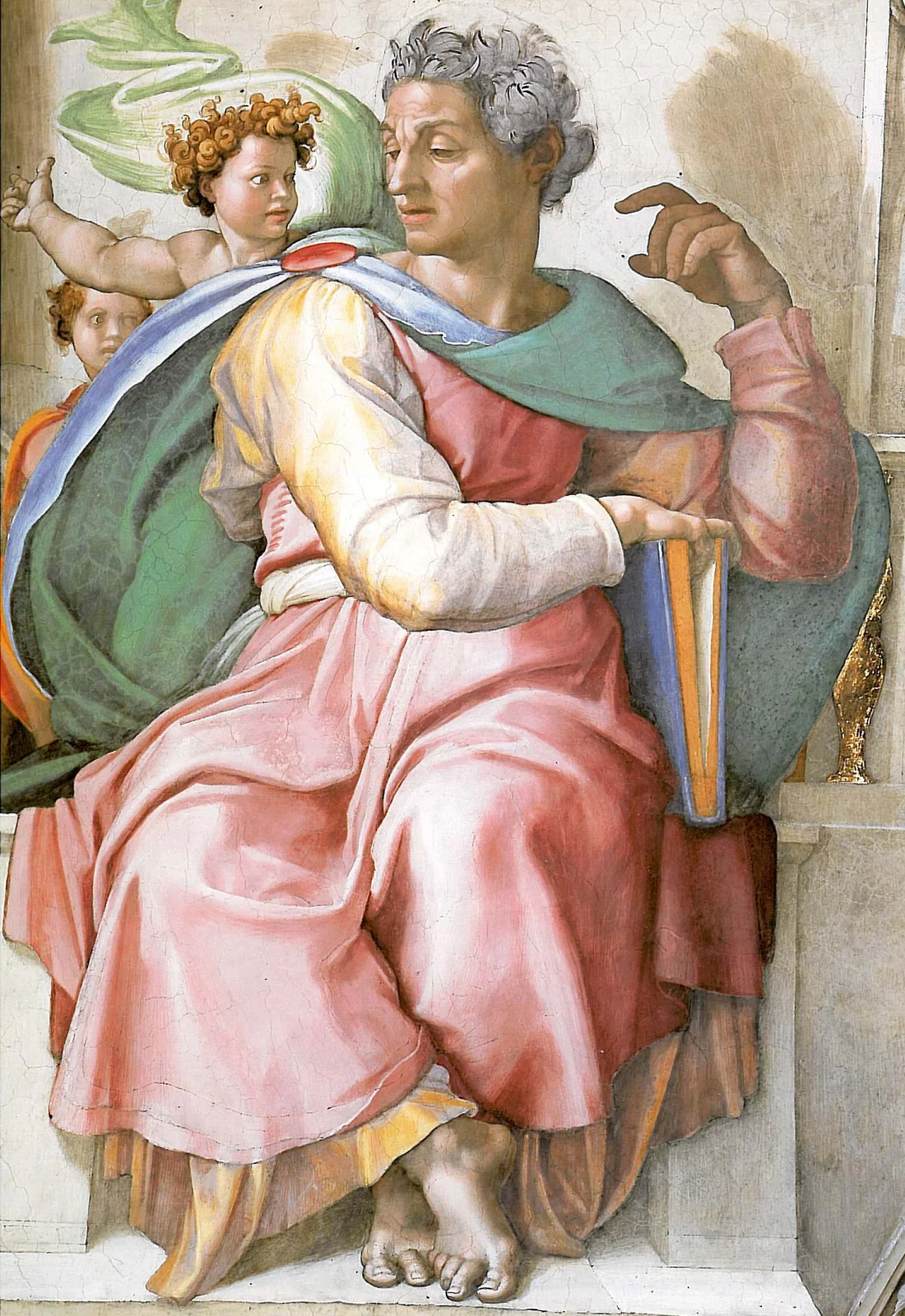
Michelangelo’s Isaiah seated with a book, turning toward two attendant figures.
Isaiah as imagined by Michelangelo. The book and listening posture offer a way to discuss the prophet’s role. Compare Isaiah’s call and response in 6:1–8. This Renaissance portrayal is a later artistic interpretation, not evidence of Isaiah’s physical appearance.Michelangelo, Prophet Isaiah, 1508–1512, Sistine Chapel ceiling. Reproduction via Wikimedia Commons · Source and image record · Public domain (PD-Art).
  1. Covenant
  2. Kingdom
  3. Prophetic warning
  4. Exile
  5. Restoration

Isaiah speaks into Judah’s life under Assyrian pressure. The book moves from judgment toward comfort for exiles and the hope of renewed creation. Before these events, Israel’s covenant calls for loyalty to God and care for neighbors. These books connect the failures of leaders and communities with judgment, grief, and the hope of restoration.

Today’s goals: trace the book’s movement; explain one image using its passage; distinguish the text’s claim from a later interpretation.

“Major” refers to the relative length of this group’s books, not a ranking of prophets’ importance. Christian Bibles commonly group Isaiah, Jeremiah, Lamentations, Ezekiel, and Daniel here. Jewish Bibles organize these books differently.

The vineyard investigation

A grower carefully tends a vineyard, but it produces bad fruit. Before reading Isaiah 5:1–7, predict what the vineyard represents.

Choose a prediction, then compare it with the passage.
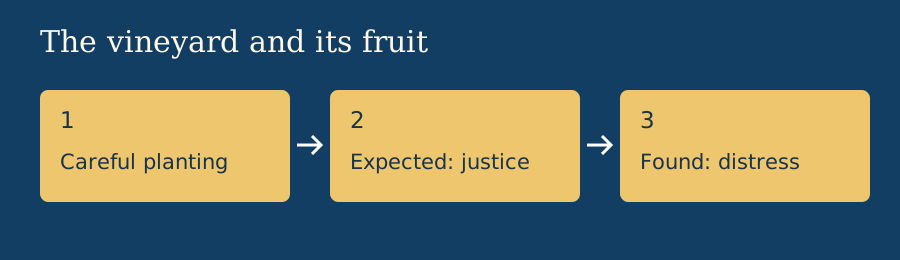
The vineyard and its fruit: Careful planting, then Expected: justice, then Found: distress.
Isaiah 5:1–7 uses a tended vineyard to expose injustice. The passage identifies the people and the expected fruit. Original ClassroomOS teaching diagram. Click to enlarge.

Trace the whole book

Choose a section, read the linked passage in your Bible, and answer with a verse. Summaries are teaching paraphrases, not Scripture quotations.

Reading lenses and teacher context

Isaiah 1–39, 40–55, and 56–66 provide a useful reading map. Traditional readers emphasize Isaiah’s authorship; many scholars distinguish material associated with later exilic and postexilic settings. Christian readers connect servant and royal passages with Jesus; Jewish readings differ. Identify the reading lens and begin with the passage.

Look closely · Read with evidence

Judgment and hope in historical art

Read each passage before studying its illustration. Name one detail supported by the text and one choice made by the artist. These works show how later readers imagined Isaiah’s message.
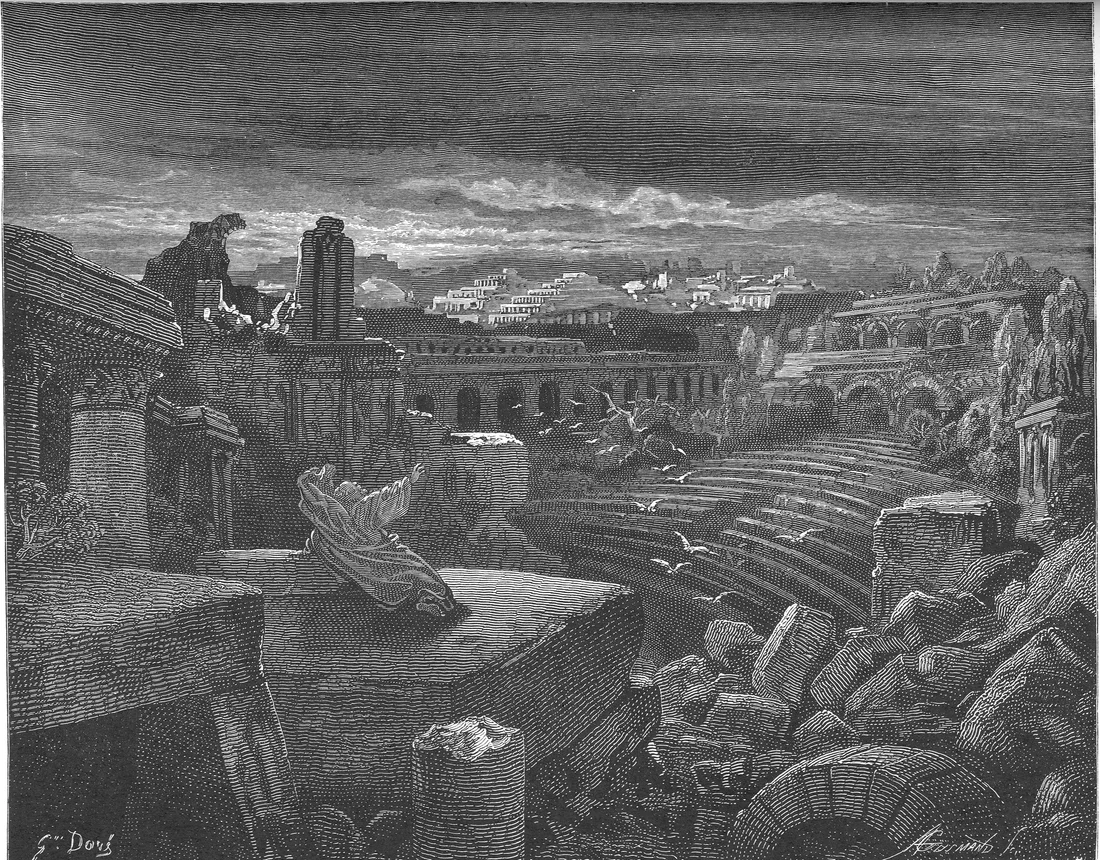
Black-and-white illustration of a robed prophet raising his arms amid ruined monumental buildings.
Judgment against Babylon · Isaiah 13:19–22. Doré places a prophet among the ruins of a once-powerful city. What details in the passage support this scene? How does the image challenge confidence in imperial power? This is a biblical illustration, not an archaeological reconstruction.Gustave Doré, Isaiah’s Vision of the Destruction of Babylon, 1866, Doré’s English Bible. Reproduction via Wikimedia Commons · Source and image record · Public domain (PD-Art).
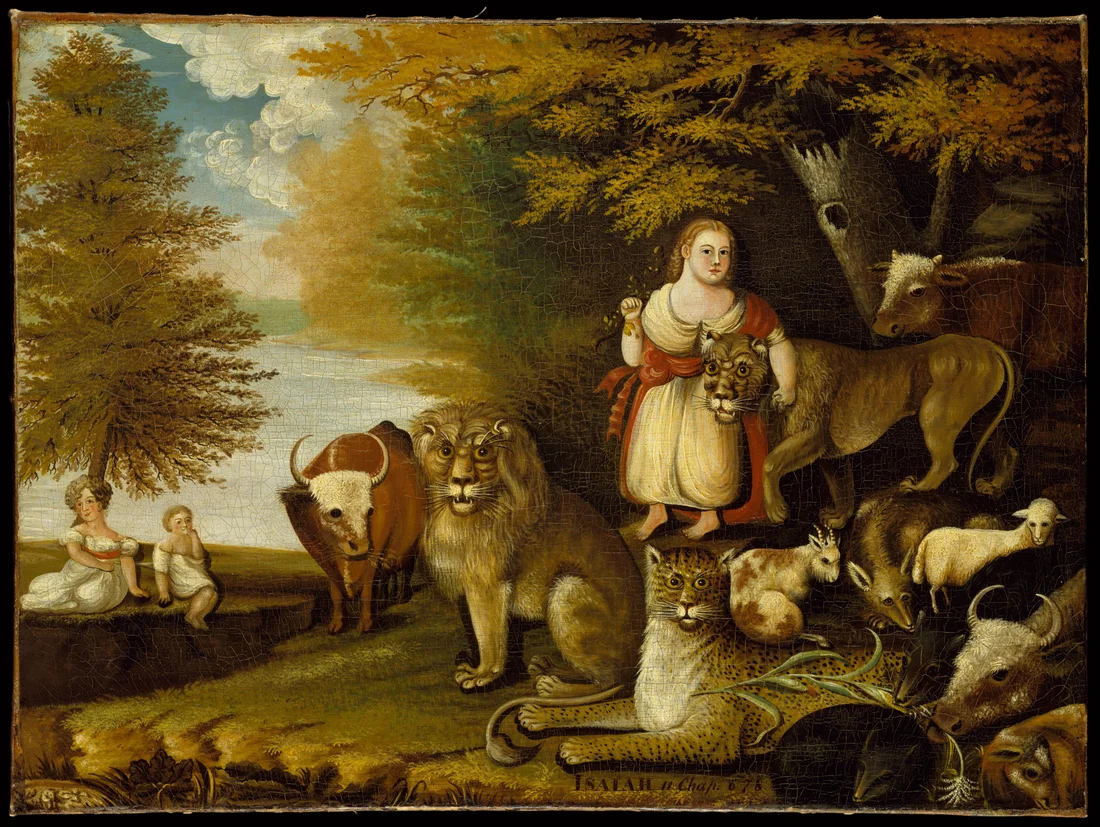
Edward Hicks’s painting of children among lions, cattle, sheep, and other animals peacefully gathered in a wooded landscape.
A vision of peace · Isaiah 11:6–9. Predators, grazing animals, and children share the scene. Hicks, a Quaker painter, connects Isaiah’s imagery with his own hope for harmony. Find two animal pairings in the passage. Then identify an element the artist adds.Edward Hicks, Peaceable Kingdom, ca. 1830–32, oil on canvas. The Metropolitan Museum of Art, 1970.283.1; Gift of Edgar William and Bernice Chrysler Garbisch, 1970 · Source and image record · CC0 1.0 / public domain.

Compare: How do the empty ruins and peaceful gathering convey different futures? Use one verse from Isaiah 13 and one from Isaiah 11 to explain.

Primary Archaeological & Manuscript Witnesses

Inscriptions and scrolls from Isaiah's world

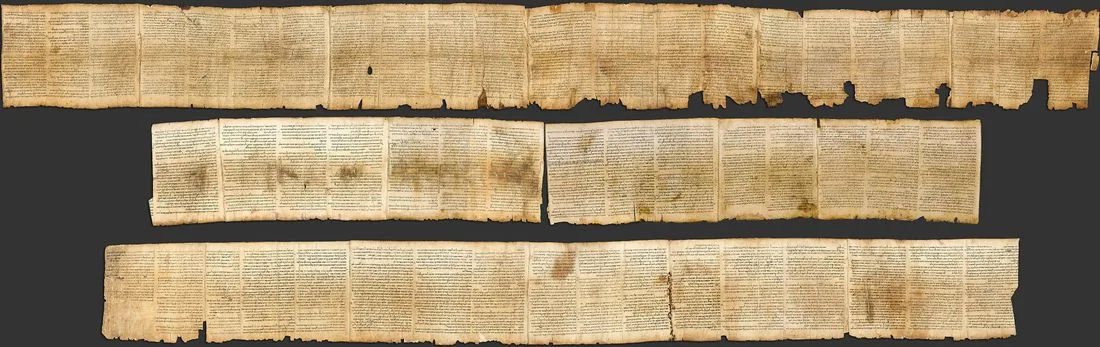
The events and transmission of Isaiah are anchored by primary discoveries from the ancient Near East. Compare Sennacherib’s imperial royal prism with the earliest surviving manuscript of Isaiah from Qumran.
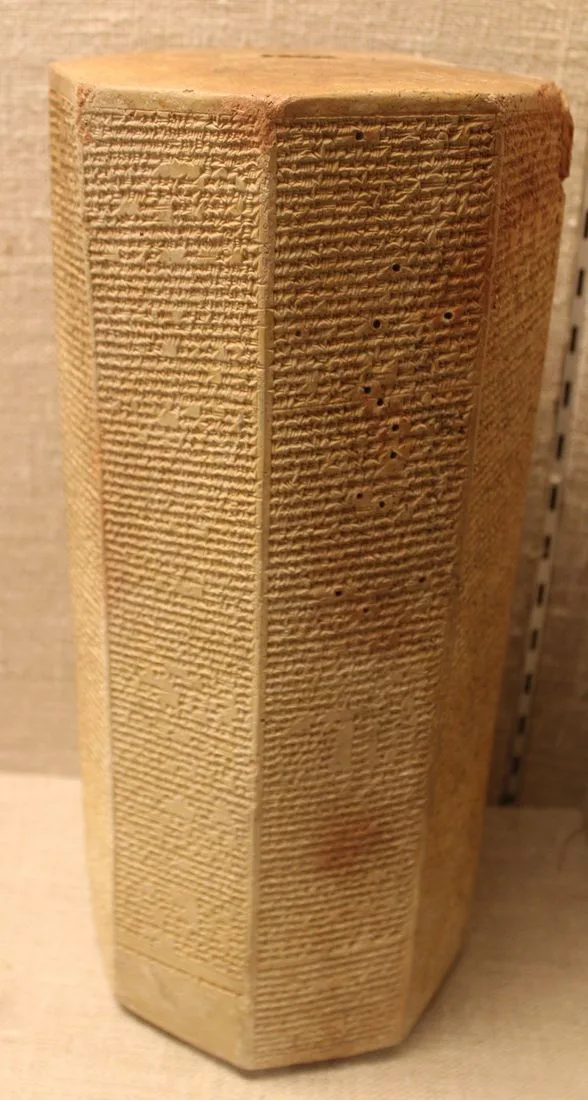
Hexagonal cuneiform clay prism of King Sennacherib of Assyria detailing his campaigns.
Archaeology · British MuseumSennacherib’s Annals Prism · The siege of Hezekiah (701 BCE). Inscribed on six sides in Neo-Assyrian cuneiform, this baked clay prism (British Museum WA 103000) records King Sennacherib's third military campaign against Judah. Sennacherib boasts: “As for Hezekiah the Judahite, who had not submitted to my yoke, 46 of his strong walled cities I besieged and took... Himself I made a prisoner in Jerusalem, his royal residence, like a bird in a cage.” Notice what the prism claims—and what it conspicuously omits: unlike other conquered cities, Sennacherib never claims to have captured Jerusalem itself. Compare this royal boast with Isaiah 36–37 and 2 Kings 19:32–36, which record the sudden lifting of the siege after King Hezekiah and the prophet Isaiah sought the LORD in prayer.Sennacherib Annals Prism (Taylor Prism), c. 691 BCE, baked clay cuneiform prism, British Museum, London · Museum record · Public domain.
Parchment columns of ancient handwritten Hebrew script from the Great Isaiah Scroll discovered at Qumran.
Manuscript Witness · Israel Museum, JerusalemThe Great Isaiah Scroll (1QIsaa) · Qumran Cave 1 (c. 125 BCE). Discovered by Bedouin shepherds in 1947 near the Dead Sea, this complete 7.34-meter parchment scroll preserves all 66 chapters of Isaiah across 54 columns of ancient Hebrew script. Copied more than a thousand years before the Aleppo Codex and Leningrad Codex, the Great Isaiah Scroll confirmed the extraordinary fidelity of the biblical copying tradition across a millennium of transmission. Notice the repair stitches, scribal marginal corrections, and paragraph divisions (*petuchot* and *setumot*): what do they reveal about how sacred Scripture was handled, corrected, and revered in the Second Temple era?The Great Isaiah Scroll (1QIsaa), c. 125 BCE, ink on parchment, Shrine of the Book, The Israel Museum, Jerusalem. Photograph via Wikimedia Commons / Google Art Project · Source and record · Public domain.

Investigate: How does comparing an Assyrian royal victory inscription with a Second Temple biblical scroll help readers distinguish between political propaganda and religious testimony? What does the surviving text of Isaiah preserve that imperial monuments never record?

Check your reading

Answer both questions and check your reasoning.

Explain with evidence

Choose an image or action from this book. What does the passage show? What does it explain? What does your reading add? Include a verse reference and connect your explanation to the big question.

Notes save in this browser as you write.

Read and continue

USCCB: Isaiah introduction and reading notes · Kingdoms, Prophets & Exile

Teacher plan · 50–60 minutes

5 minutes: locate the book in the story. 10 minutes: predict, read, and compare. 20 minutes: assign reading sections to pairs and build a whole-book explanation. 10 minutes: check answers and discuss evidence. 10 minutes: write an explanation. For younger readers, use the first passage and explain the image orally. For extension, compare two translations and distinguish textual observations from interpretive claims. Let students discuss textual grief without requiring personal disclosures.

Historical timeline

Scroll sideways, or focus the timeline and use the left and right arrow keys.

  1. Isaiah’s call

    Isaiah sees the Lord and receives his commission (Isaiah 6).

  2. Syro-Ephraimite crisis

    Isaiah calls Ahaz to trust God rather than alliances.

  3. Assyria threatens

    Jerusalem faces Sennacherib during Hezekiah’s reign.

  4. Comfort and renewal

    The book looks toward return, a servant, and a renewed creation.