Physics · Lesson 13
The Pendulum
A weight on a string, swinging back and forth under gravity. The pendulum is one of the oldest mechanical timekeepers and one of the most elegant demonstrations of energy conservation — potential and kinetic energy trading back and forth with each swing.
Galileo and the Pendulum
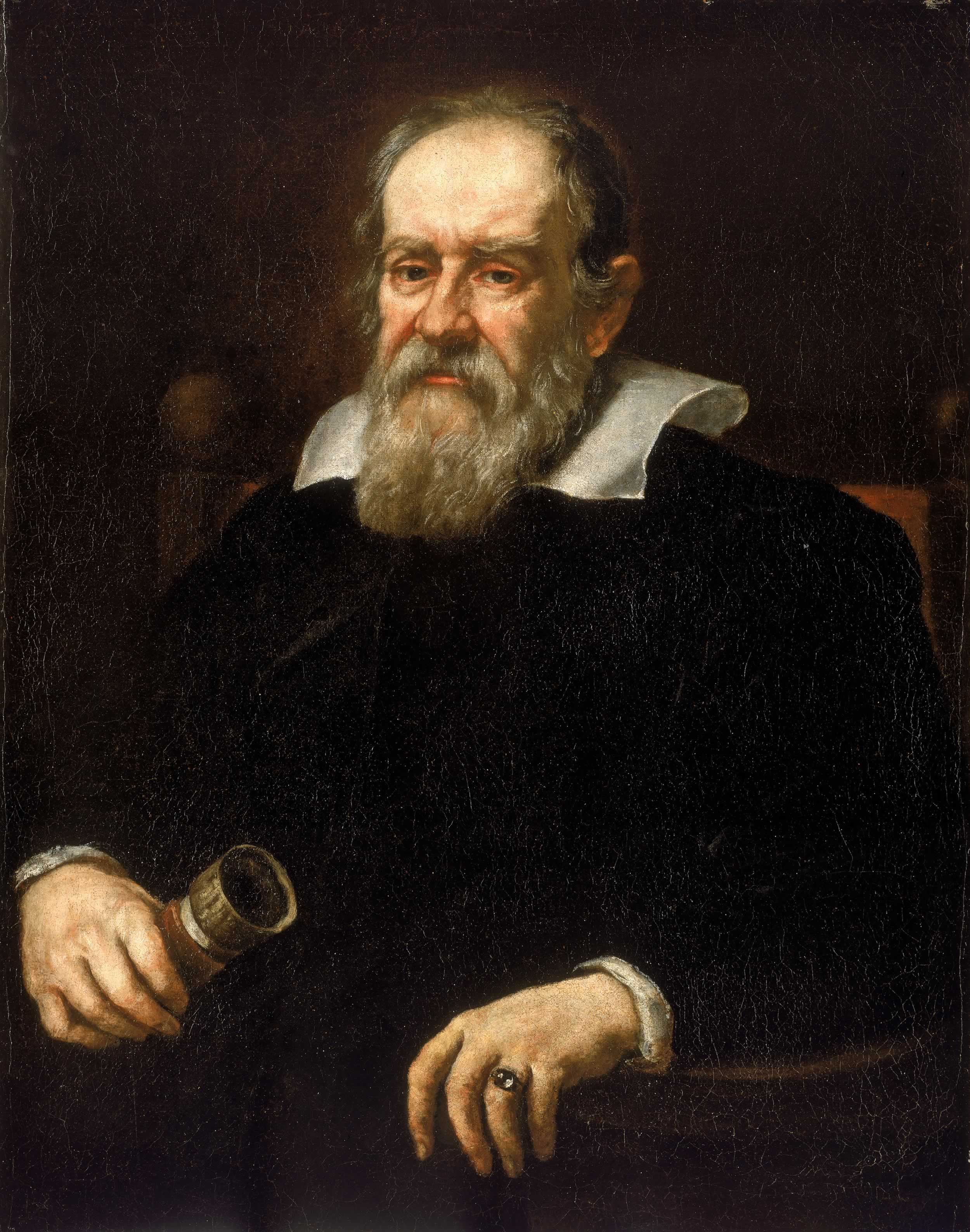
Galileo Galilei (1564–1642) reportedly observed a chandelier swinging in the Cathedral of Pisa and noticed something remarkable: regardless of how wide the swing, it seemed to take the same time to complete each oscillation. He tested this using his own pulse as a timer. This property — constant period for small angles — led to the development of pendulum clocks, which were the world's most accurate timekeepers for nearly 300 years.
The Period Formula
For small angles, the period T of a simple pendulum depends only on its length and gravitational acceleration — not on the mass of the bob or the amplitude:
Energy Exchange
At the highest points of the swing, the bob momentarily stops — all energy is gravitational potential energy (PE = mgh). At the lowest point (the center), the bob moves fastest — all energy is kinetic (KE = ½mv²). Throughout the swing, the total energy is conserved: PE + KE = constant.
Energy Conservation Lab
Drag the bob to set the release angle, then watch potential and kinetic energy trade places in real time. Switch environments, add air friction, and turn on the strobe trail to make the motion easier to read.
Without friction, PE + KE stays nearly constant. Add drag and the missing mechanical energy reappears in the orange heat bar.
Real-World Applications
Practice Problems
Use T = 2π√(L/g). g = 9.81 m/s². Round to 2 decimal places.
Easy1. A pendulum has length 1 m on Earth. What is its period? (2π√(1/9.81))
Easy2. If you double the length of a pendulum, what happens to its period?
Medium3. A pendulum on the Moon (g = 1.62 m/s²) has length 0.5 m. What is its period?
Challenge4. A grandfather clock pendulum has a period of exactly 2 s. What must its length be? (L = g(T/2π)²)