Mathematics · Lesson 01
The Story of Numbers
Before algebra, geometry, or calculus — there were numbers. Humans have been counting, trading, and building with numbers for over 30,000 years. This lesson traces that story, introduces the different kinds of numbers, and shows why one forbidden operation would make all of mathematics collapse.
📜 Where Numbers Come From
Numbers weren't invented all at once. They evolved over thousands of years, each civilisation adding another piece. Here are the biggest milestones:
- ~30,000 BC
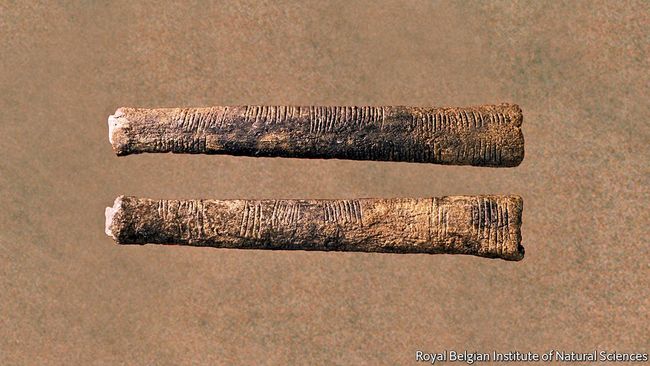 CountingTally bones. The Lebombo Bone found in Swaziland has 29 notches carved into it — likely a counting tool or lunar calendar. Humans were tracking quantities before writing fully existed.
 - ~3,000 BC
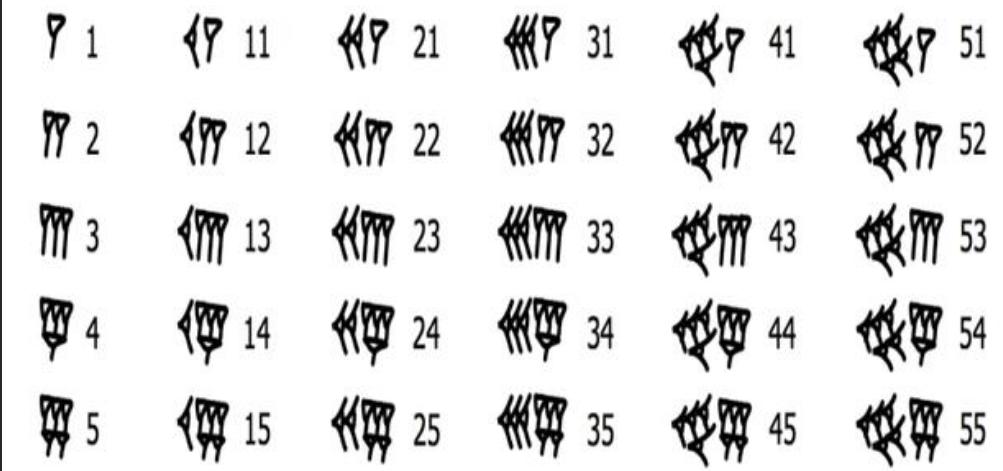 Place ValueBabylonian base-60. The Babylonians counted in groups of 60 — which is why we still have 60 seconds in a minute and 360° in a circle. They were also early pioneers of place-value notation.
 - ~300 BC
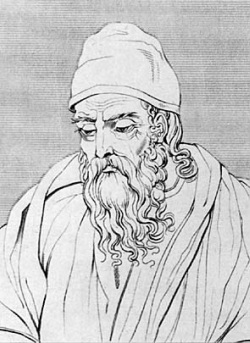 Proof & PrimesGreek number theory. Euclid proved there are infinitely many prime numbers. The Greeks had no symbol for zero — they considered it philosophically absurd to have a "number of nothing."
 - 628 AD
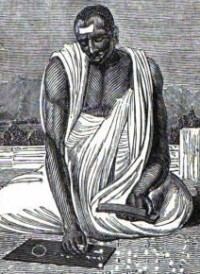 The Concept of ZeroZero becomes a number. Indian mathematician Brahmagupta was the first to treat zero as a real number with arithmetic rules — including what happens when you add, subtract, and multiply with it. Revolutionary.
Concept Brahmagupta's framing Positive numbers "Property" or fortune Negative numbers "Debt" Zero Nothing / void - ~1200 AD
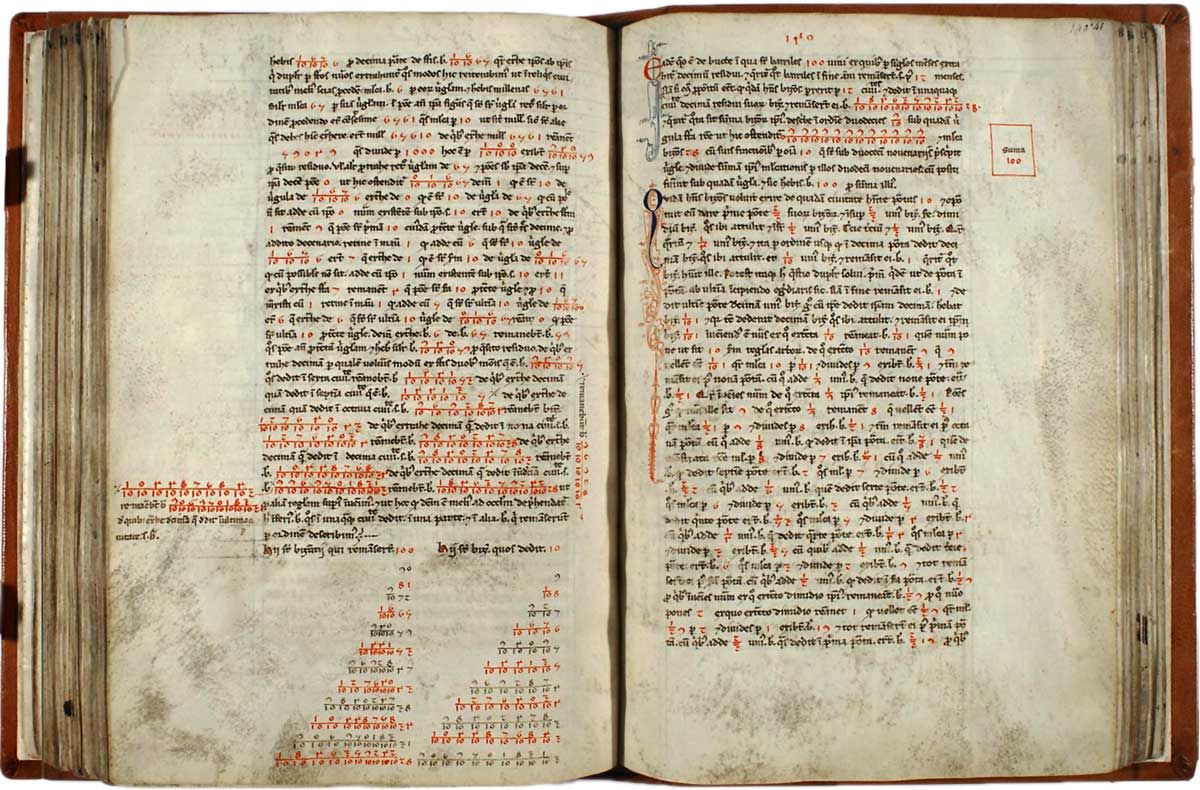 Base-10 SystemHindu-Arabic numerals reach Europe. Fibonacci's Liber Abaci introduced Europeans to the 0–9 system we use today. Before this, Europe used Roman numerals — try doing long division with IV, XII, and XLVIII.
 - Today Binary LogicBinary powers the world. Every computer runs on just two digits: 0 and 1. Every image, video, and message you send is ultimately a very long sequence of zeros and ones.
🔢 The Number Zoo
Not all numbers are the same type. Mathematics organises them into families — and knowing which family a number belongs to tells you a lot about how it behaves. Click any card to learn more.
Integers = whole counting numbers
Integers are whole numbers. We use them to count steps, blocks, apples, and days.
Fractions — The Partition Lab
A fraction shows how a whole is split into equal parts.
Decimals — The Place Value Lab
Decimals show parts of a whole using tens.
Ratios — The Comparison Lab
A ratio compares two quantities.
⭐ Prime Numbers
A prime number is a whole number greater than 1 that can only be divided evenly by 1 and itself. That makes primes the "atoms" of mathematics — every other whole number is built from primes multiplied together.
▶ Why primes matter
Encryption: When you buy online, your card is protected because factoring a huge number back into primes is computationally impossible — a 2048-bit key uses a ~600-digit number no computer can crack.
Nature: Cicadas emerge on 13- or 17-year prime cycles to minimise overlap with predator population spikes. Nature discovered primes before mathematicians did.
✖️ Factors & Multiples
Two sides of the same coin. Understanding them makes fractions, algebra, and even music theory much easier.
Factor Finder
Enter any number (2–10,000) to see all its factors and its prime factorisation.
🌀 Modular Arithmetic — Pattern Math
Clock math is just the beginning. When a number wraps around a circle and gets multiplied again and again, modular arithmetic turns into geometry. The result is string art made from pure remainders.
Written as: a mod n = the remainder when a is divided by n.
Modular String Art
Pick how many points live on the circle and how fast the multiplier changes. At multiplier 2, the pattern forms a cardioid. At 3, a nephroid appears. Arithmetic becomes visible. Set speed to 0 to freeze on any shape — then drag the multiplier slider to explore by hand.
At multiplier 2, every point connects to double itself around the circle. The repeated wraparound makes a heart-like cardioid.
This is why modular arithmetic matters in computer graphics, music sequencing, cryptography, and digital pattern design: the same remainder rule can create rhythm, symmetry, and structure.
Mod in the Real World
🔎 The Infinite Zoom Number Line
Between 0 and 1 there is no “next” fraction. Zoom in and the line keeps revealing new rational waypoints: halves, quarters, eighths, sixteenths. Density is the point.
Each zoom step halves the window around the centre. New fractions appear because number lines are not made of isolated pebbles; they are dense with structure.
💥 Why It All Matters: Division by Zero
Every rule in mathematics exists for a reason — and nowhere is this clearer than the rule you've probably heard since primary school: you cannot divide by zero.
Division asks: "How many times does this number fit into that one?" So 10 ÷ 2 = 5 means "2 fits into 10 exactly 5 times." Now ask: how many times does 0 fit into 10? Zero fits in infinitely many times — and infinity isn't a number, it's a concept. The question has no meaningful answer.
Watch What Happens
Drag the divisor toward zero. Watch the result grow without bound.
✏️ Practice Problems
1. What is the smallest prime number?
Hint: remember — 1 is not prime. The smallest prime is the first number divisible only by 1 and itself.
2. How many factors does 24 have? (count them all)
Hint: factors of 24 are 1, 2, 3, 4, 6, 8, 12, 24 — count them.
3. What is 17 mod 5?
Hint: 5 goes into 17 three times (= 15). What's left over?
4. Convert the fraction ¾ to a decimal.
Hint: divide 3 by 4.
5. It is 9 o'clock. What time will it be in 50 hours? (give a number 1–12)
Hint: (9 + 50) mod 12 = 59 mod 12. 12 × 4 = 48, so 59 − 48 = ?