Composer arrangement studio
Pyotr Ilyich Tchaikovsky
Arranging with care
A source staff is not always the melody: in an orchestral score, find the staff carrying the theme. A two-part piano study pairs your selected voice with a source bass; it is not a concert reduction and wide leaps may need redistribution. Saxophone notation is transposed while playback stays at concert pitch. Violin parts stay at concert pitch and are moved by octaves to sit above the open G string. Guitar tab preserves pitch and rhythm but may need a different octave or fingering. Chords are prepared for the Ode to Joy theme only; classical harmony elsewhere requires score study rather than automatic chord guesses. Original ensembles are available only where the source contains those parts. Piano reductions and original classroom studies retain their source identities.
Recordings: Nicholaus P. Brosowsky’s Tonejs-Instruments sample collection, CC BY 3.0; VSCO 2 Community Edition, CC0. Sample credits and processing.
Music · Romantic Era · Orchestral Colour
About Pyotr Ilyich Tchaikovsky
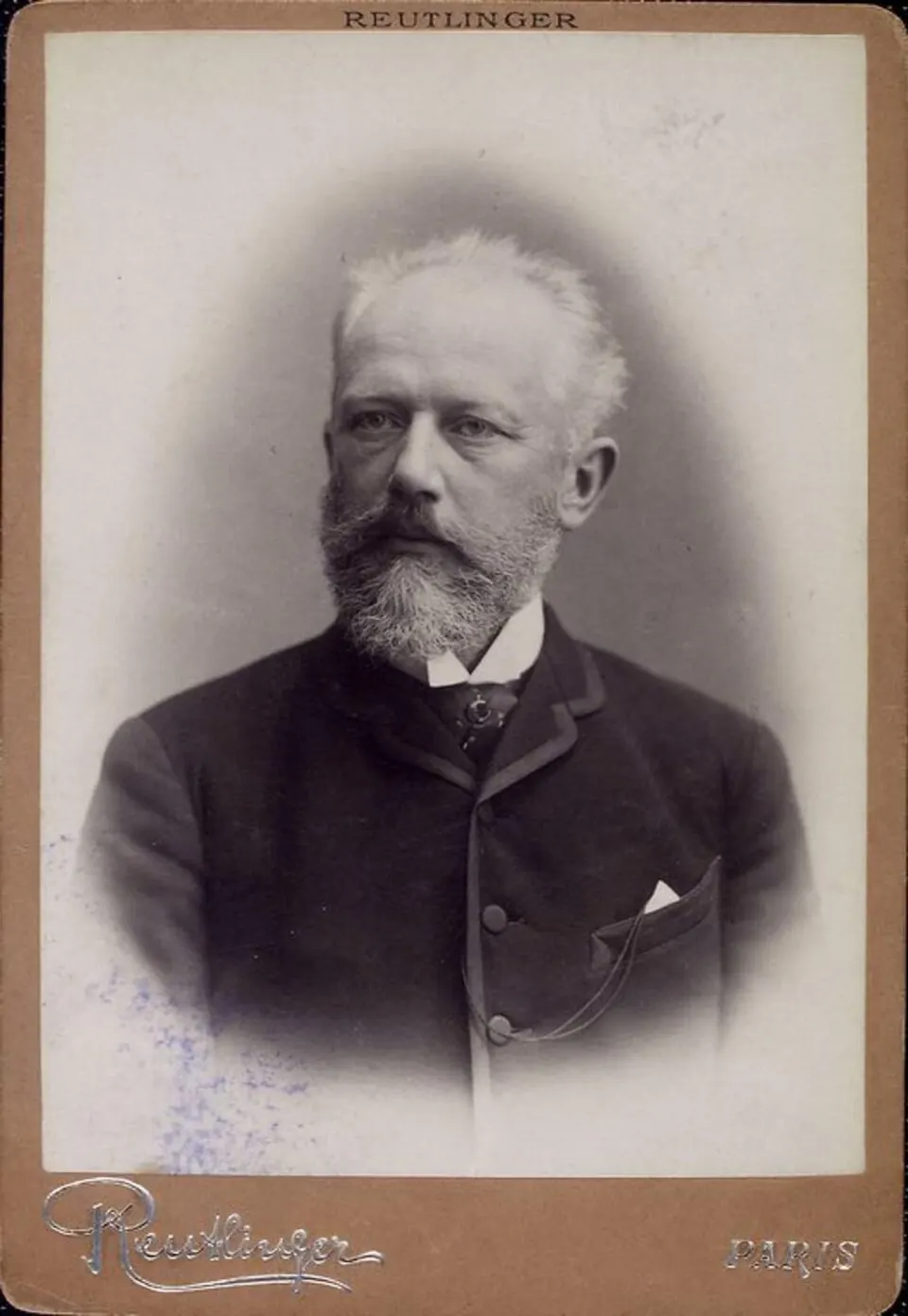
Pyotr Ilyich Tchaikovsky (1840–1893) began his working life as a government clerk and became the most internationally famous Russian composer of his century. His ballets Swan Lake, The Sleeping Beauty and The Nutcracker are among the most performed in the world, and he had a special gift for melody and for the colours of the orchestra.
Who Was Tchaikovsky?
Tchaikovsky was born on May 7, 1840, in Votkinsk, a mining town in the Ural region of Russia, where his father managed the ironworks. He had piano lessons as a child and was deeply sensitive to music, but his parents did not see music as a respectable career. He studied law in St. Petersburg and in 1859 became a clerk at the Ministry of Justice.
In 1862 he enrolled in the newly founded St. Petersburg Conservatory — among its very first students — and studied with its founder, Anton Rubinstein. In 1866 he moved to Moscow to teach harmony at the new Moscow Conservatory. Over the next decade he wrote symphonies, the First Piano Concerto and the ballet Swan Lake (1877).
From 1877 a wealthy widow, Nadezhda von Meck, gave him a yearly allowance that let him quit teaching and compose full time. They wrote more than a thousand letters to each other but agreed never to meet. Tchaikovsky became a celebrated conductor of his own music; in 1891 he travelled to the United States and conducted at the opening festival of Carnegie Hall in New York. In 1878 he wrote a set of 24 short piano pieces for children, Album for the Young, dedicated to his nephew Vladimir Davydov.
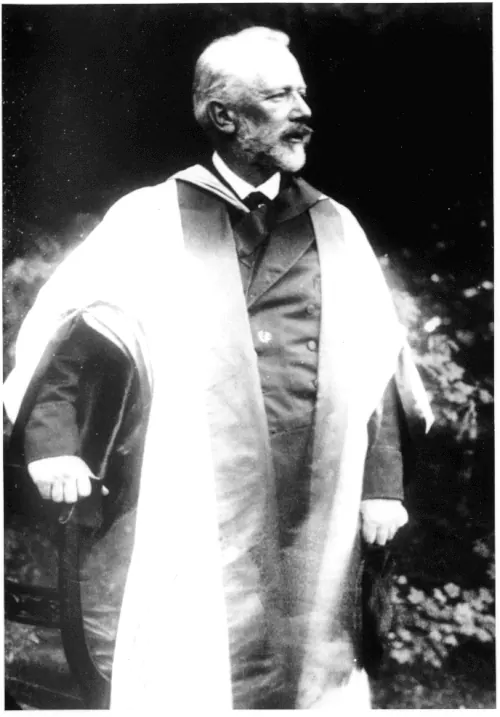
His last years brought The Sleeping Beauty (1890), The Nutcracker (1892) and an honorary doctorate from Cambridge University in June 1893. He conducted the premiere of his Sixth Symphony, the “Pathétique,” in October 1893 and died in St. Petersburg nine days later, on November 6, aged 53 — officially of cholera.
Tchaikovsky in Cambridge and on Stage
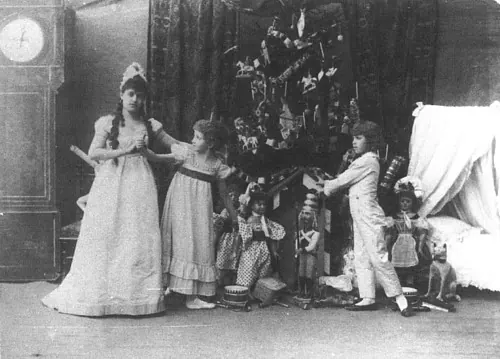
Tchaikovsky lived in the age of photography, so we can see him at the height of his fame and see the first production of his most famous ballet. Click any picture to enlarge it.
From Clerk to Conductor
- 1840 Born May 7 in Votkinsk, Russia.
- 1859 Graduates in law; becomes a clerk at the Ministry of Justice.
- 1862 Enters the new St. Petersburg Conservatory.
- 1866 Begins teaching harmony at the Moscow Conservatory.
- 1875 Piano Concerto No. 1.
- 1877 Swan Lake premieres; support from Nadezhda von Meck begins.
- 1878 Album for the Young, Op. 39, for his nephew.
- 1880 Writes the 1812 Overture, scored with real cannon fire.
- 1891 Conducts at the opening festival of Carnegie Hall, New York.
- 1892 The Nutcracker premieres in St. Petersburg.
- 1893 Symphony No. 6 premieres; Tchaikovsky dies on November 6.
Timbre and the Secret Celesta
Two instruments can play the same pitch and still sound completely different. That difference is timbre: the mix of overtones each instrument produces, plus how the sound starts and fades. A violin’s bowed string produces a steady sound rich in overtones; a struck metal bar rings with a bright, bell-like set of overtones that dies away.
In 1891 Tchaikovsky heard a new instrument in Paris, the celesta, invented by Auguste Mustel. It looks like a small piano, but its hammers strike steel bars mounted over wooden resonators, giving a sparkling, bell-like tone. He wrote it into “Dance of the Sugar Plum Fairy” in The Nutcracker — and asked his publisher to keep it secret so that rival Russian composers would not use it first.
The score player in Read & Play can change sounds. Its “Celesta-ish” setting uses frequency modulation to imitate a bell-like tone; it is only an approximation, but it shows how the same notes take on a new character.
Same pitch + different overtones and envelope = a different instrument. Orchestration is choosing timbres like a painter chooses colours.
Did the 1812 Overture really use cannons?
Why is Album for the Young special?
Was The Nutcracker a hit at first?
Read & Play: Ballet Favorites and Piano Pieces
Start with three familiar melodies from Swan Lake and The Nutcracker, then explore two complete pieces from Album for the Young. Press Play, then change the Sound to “Celesta-ish” and “Strings” and listen to how the same notes change character.
The ballet selections are excerpts from piano arrangements; their bar numbers refer to the linked piano editions. The two Album for the Young pieces are complete original piano works. Use the song map or the Bar box to jump anywhere, click a note to hear it, and Shift-click a second bar to loop a passage. The guide follows the music as it plays; mute a hand to hear one line alone. Each player links to its complete printed source edition.
Swan Lake theme · piano arrangement, bars 1–27
To study the celesta writing in Dance of the Sugar Plum Fairy, consult the historical score editions of the Nutcracker Suite.
Waltz of the Flowers · piano duet arrangement, bars 34–65
Old French Song · complete, both hands
March of the Wooden Soldiers · complete, both hands
Hear Tchaikovsky's Music
These public-domain recordings come from historic 78 rpm discs and older orchestral releases. Listen for the celesta in the Sugar Plum Fairy.
- In the Sugar Plum Fairy, the celesta plays the tune over plucked strings. Then the Russian Dance bursts in — what changes?
- Swan Lake’s famous theme is first played by a solo oboe over trembling strings. Why might an oboe suit a swan?
- In the 1812 Overture, listen for a French tune (the Marseillaise) and a Russian hymn competing.
Tchaikovsky's Key Contributions
Swan Lake, The Sleeping Beauty and The Nutcracker gave ballet scores the depth of a symphony, and they remain the best-known ballets ever written.
He was one of the first composers to use the celesta in the orchestra, most famously for the Sugar Plum Fairy in The Nutcracker.
His symphonies range from folk-song themes to the deeply personal Sixth, the "Pathétique," which he conducted days before his death in 1893.
His Piano Concerto No. 1 and his Violin Concerto are among the most performed concertos in the world.
He was in the first graduating class of the St. Petersburg Conservatory and then taught harmony at the Moscow Conservatory for twelve years.
He toured Europe as a conductor and in 1891 conducted at the opening of Carnegie Hall in New York.
Tchaikovsky's Legacy Today
Tchaikovsky showed that a Russian composer could write music in the big European forms — symphony, concerto, ballet — with a voice that was both personal and Russian. His ballets lifted ballet music from background accompaniment to great music in its own right.
His melodies have travelled far beyond the concert hall: into films, cartoons, figure skating, and the yearly Nutcracker performances that introduce many children to an orchestra for the first time. The celesta he smuggled home is now a standard orchestral instrument — and its bell-like sound has become shorthand for magic in film music.
Find the Complete Sheet Music
Tchaikovsky's music is in the public domain, so complete scores are free to download, print and play. The opening excerpt and complete melody above draw on these editions.
Practice Problems
Review: Biography · The musical idea · Read and play.
Use the score, the recordings and the biography above.
Easy1. Which of these ballets did Tchaikovsky NOT write?
Easy2. How many flats are in the key signature of Old French Song?
Medium3. What instrument plays the melody in the Dance of the Sugar Plum Fairy?
Medium4. What job did Tchaikovsky have before becoming a full-time musician?
Medium5. The Nutcracker premiered in 1892. How many years ago was that in 2026?
Medium6. In a 2/4 bar, a double-dotted quarter note is worth 1¾ beats. How many beats are left for the sixteenth note after it?
Challenge7. Two instruments play the same pitch, but you can tell them apart. What is that difference called?
Challenge8. Why did Tchaikovsky want the celesta kept secret?