The asteroid was real, but the extinction was not a one-frame explosion. Students trace how impact energy, blocked sunlight, volcanic stress, ocean chemistry, and food webs turned one event into a months-to-years ecological collapse.
66 million years agoNon-avian dinosaursImpact winterMarine planktonSurvivor niches
Impact Site & Global Tsunami
Maastrichtian paleogeography near 66 Ma, with definitive reconstructed coastlines, an open Central American Seaway, island-rich Europe, and isolated India. Political borders are omitted because countries did not yet exist.
PRE-IMPACT
Impact site
Modeled relative strengthLower>1 m>10 m>100 m Gulf
Animated interpretation of modeled offshore amplitudes—not a precise forecast · Range et al. 2022
Biosphere status · illustrative sample
K–Pg Extinction Ledger
The fossil record cannot provide a literal death order. This compressed sequence tracks representative taxa and moves toward the estimated global loss of roughly three out of every four species.
0%estimated global species loss
NASA illustration of several phytoplankton forms
Calcareous phytoplanktonMarine primary producers
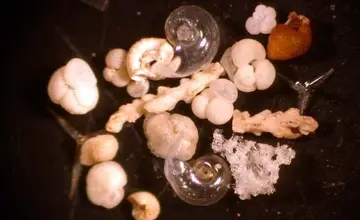
At riskNOAA photograph of planktonic foraminifera tests
Planktonic foraminiferaMany boundary-crossing species lost
At riskRUDIST
Rudist bivalvesCretaceous reef builders
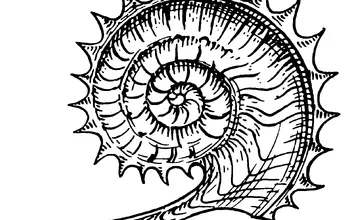
At riskPublic-domain line illustration of an ammonite shell
AmmonitesMarine cephalopod lineage
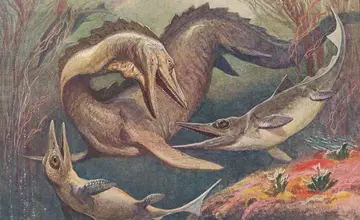
At riskHistorical public-domain painting of mosasaurs
MosasaursLarge marine reptiles
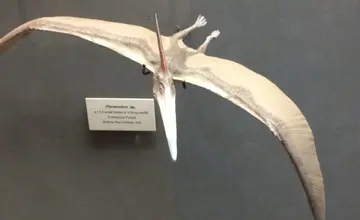
At riskCC0 photograph of a pterosaur model
PterosaursNon-avian flying reptiles
At riskENAN
Enantiornithine birdsMajor archaic bird lineage
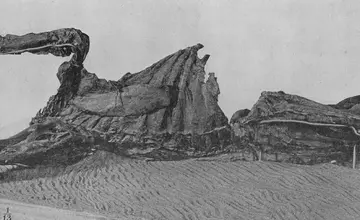
At riskPublic-domain historical photograph of an Edmontosaurus mummy fossil
Edmontosaurus annectensLarge hadrosaur
At riskANK
Ankylosaurus magniventrisArmored herbivore
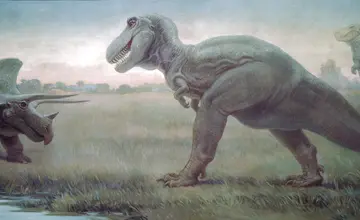
At riskCharles R. Knight public-domain painting of Triceratops and Tyrannosaurus
Triceratops horridusCeratopsian herbivore
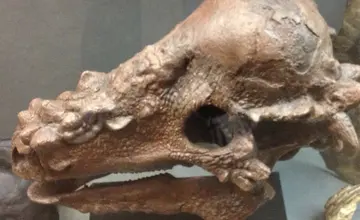
At riskPublic-domain photograph of a Pachycephalosaurus skull cast
PachycephalosaurusDome-headed ornithischian
At riskCharles R. Knight public-domain painting of Tyrannosaurus and Triceratops
Tyrannosaurus rexLarge theropod predator
At risk
Representative examples only. Losses unfolded through interconnected land and ocean systems over time—not in this exact order.0 of 12 representative taxa marked
Sunlight is blockedDust, soot, and sulfur aerosols reduce photosynthesis and cool the surface.
Months-years
Food webs collapsePlants and plankton decline first, then herbivores, predators, and marine reptiles lose their energy base.
Afterward
Survivors inherit the recoveryBirds, mammals, crocodilians, turtles, insects, seeds, spores, and deep-water food chains shape the next world.
3D Extinction Gallery
Tyrannosaurus rex
A large non-avian theropod predator. Use it to ask why apex predators are vulnerable when herbivore prey disappears. Source
Triceratops
A late Cretaceous herbivore. Connect its survival problem to photosynthesis, plant die-off, and calorie demand. Source
Mosasaurus
A marine reptile, not a dinosaur. Its extinction keeps ocean chemistry and plankton collapse in the story. Source
Pteranodon
A pterosaur, not a dinosaur. It helps separate clades from the broad popular label "prehistoric animals." Source
Ankylosaurus
An armored herbivore from the late Cretaceous. Armor did not solve a collapsing food system. Source
Ammonite
A marine cephalopod group that vanished at the boundary. A compact doorway into ocean food webs and index fossils. Source
Misconception vs Evidence
Misconception
Better framing
Instant explosion
The impact started a cascade. The mass extinction played out through climate, photosynthesis, and food webs.
All dinosaurs died
Non-avian dinosaurs died out. Avian dinosaurs survived as birds.
Fire killed everything
Fire, tsunamis, and heat mattered, but darkness, cooling, acidification, and starvation carried the global damage.
Mammals were smarter
Survival favored niches: small bodies, burrowing, scavenging, flexible diets, seeds, dormancy, and lower energy needs.
Classroom Prompt
Story of Numbers extension: Build a timeline where each number has a job. Which numbers show scale, which show duration, which show survival, and which reveal that tiny organisms can decide the fate of giant animals?