A peninsula can be a crossroads. Follow the water to discover Indigenous homelands, Atlantic connections, living wetlands, stories, and journeys into space.
Guiding question: How does a place shape its people—and how do people reshape a place?
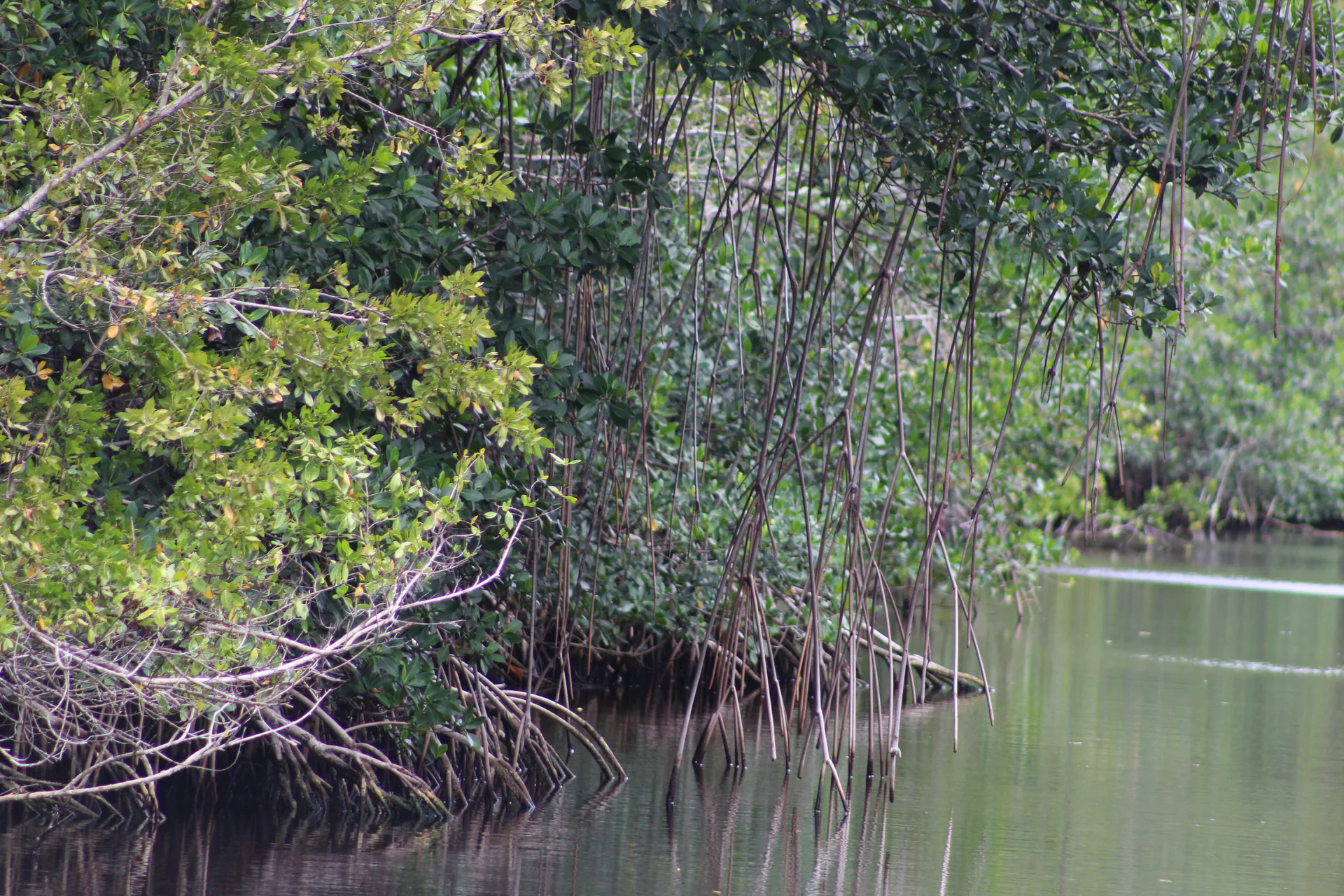
FIELD NOTES / 01 Where land meets water Mangrove roots shelter young marine life along Florida’s tidal waterways. A. Sanchez / National Park Service · Public domain. Source
27th State · March 3, 1845
Tallahassee Capital
Peninsula Water on three sides
Sunshine State Nickname
Your field mission
Observe a place Follow connections Build a claim
By the end, explain how Florida’s geography connects to its history, compare habitats, and support a claim about a Floridian’s impact with evidence.
Classroom route · 60–75 minutes: locate Florida (5), investigate history (15), explore habitats (15), discuss culture and people (15), then complete a field notebook and exit ticket (10–25). Younger explorers can work with a partner; older students can compare sources and tradeoffs.
01 / Read the place
Between a continent and the Caribbean
Florida extends southeast from the United States. Georgia and Alabama lie to its north; the Atlantic Ocean lies east; the Gulf of Mexico lies west; and the Florida Straits separate the Keys from Cuba. The Panhandle stretches west, while the Florida Keys curve southwest from the peninsula.
One state, several regions
Compare the Panhandle’s beaches and pine forests, north Florida’s springs, central Florida’s lakes and cities, the Atlantic Space Coast, and south Florida’s wetlands and islands. Miami, Orlando, Tampa, Jacksonville, and Tallahassee are different urban centers with different histories.
Water above and below
Rain can soak through limestone into an aquifer, an underground layer that stores and carries water. Springs are places where groundwater reaches the surface. What happens on land can affect drinking water, rivers, and coastal habitats.
Follow the water
01 / ABOVE Rain falls
Water arrives on the land.
02 / BELOW Limestone aquifer
Groundwater is stored and carried underground.
03 / AT THE SURFACE Springs & rivers
Groundwater emerges and flows onward.
04 / AT THE COAST Connected habitats
Water quality affects coastal life.
Atlas challenge: On a classroom atlas, locate Florida, its two neighboring states, Cuba, Lake Okeechobee, the Everglades, and the Keys. Trace a possible sea journey from the Caribbean to Miami. Why might ports connect cultures?
02 / History & famous events
Florida’s story begins long before statehood
Indigenous peoples lived here for thousands of years before Europeans arrived. The Calusa, Timucua, Apalachee, and Tequesta were distinct peoples with different languages, communities, and relationships with land and water. European colonization brought warfare, forced labor, disease, and dispossession.
1513 · Spain claims “La Florida”
Juan Ponce de León’s voyage connected Florida to Spain’s colonial expansion. Calling this a European arrival is more accurate than saying an already inhabited place was “discovered.”
1565 · St. Augustine
Spain established St. Augustine, the oldest continuously occupied European-founded settlement in what is now the United States. Its history includes Indigenous people, Africans, and Europeans.
1763–1821 · Changing colonial rulers
Britain controlled Florida from 1763 to 1783; Spain then regained it. The 1819 Adams–Onís Treaty arranged the transfer to the United States, which took possession in 1821.
1835–1842 · Second Seminole War
The United States used war to force Seminole people from their homelands. Many were removed west; others resisted and remained. Black Seminoles also fought for freedom. The Seminole Tribe of Florida and Miccosukee Tribe of Indians of Florida are living sovereign nations today.
1845–1865 · Statehood, slavery, and war
Florida became the 27th state on March 3, 1845, as a slave state. It seceded in 1861 and joined the Confederacy. Slavery ended in 1865; emancipation did not end discrimination or the struggle for equal rights.
1964 · St. Augustine civil rights movement
Local Black residents and visiting activists challenged segregation through demonstrations. Their courage helped draw national attention to the need for the Civil Rights Act.
July 16, 1969 · Apollo 11 launches
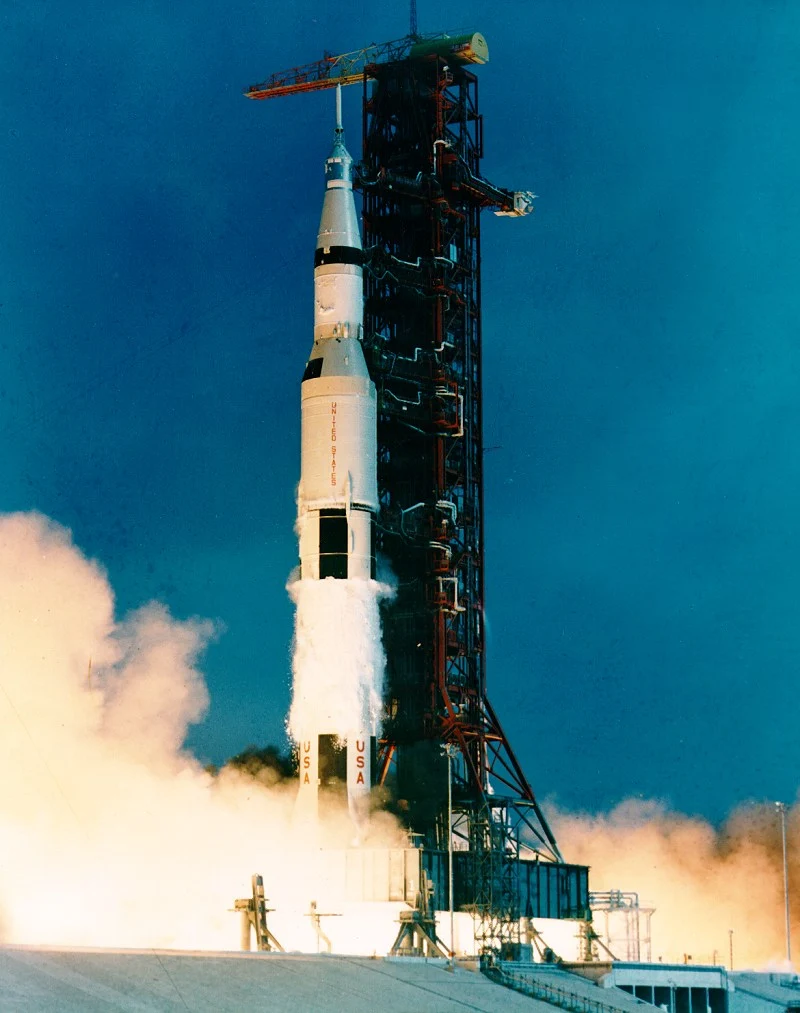
A Saturn V carried Apollo 11 from Kennedy Space Center toward the Moon. Florida’s Space Coast connects geography, engineering, teamwork, and exploration.
1971 · Walt Disney World opens
The resort’s opening became a landmark in central Florida’s tourism growth. Consider how a major attraction changes jobs, roads, housing, water use, and land.
1992 · Hurricane Andrew
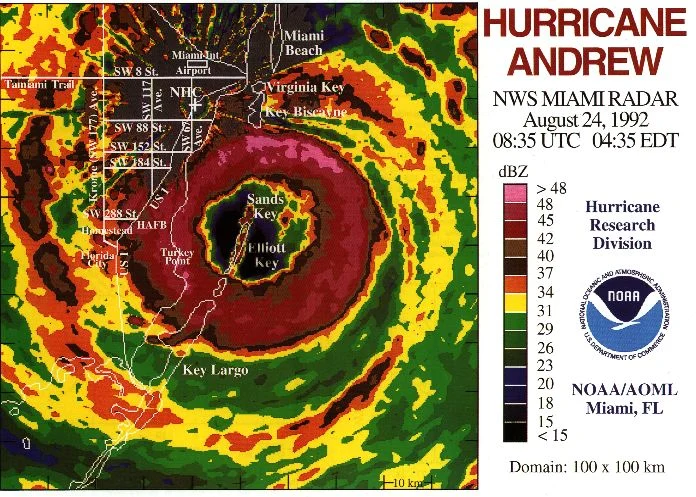
Andrew devastated parts of south Florida. The disaster raised urgent questions about buildings, preparedness, and how communities recover.
Read three records of change
Open each image and separate what you can observe from what you need another source to establish. These records show different moments and purposes; they do not illustrate every event on the timeline.
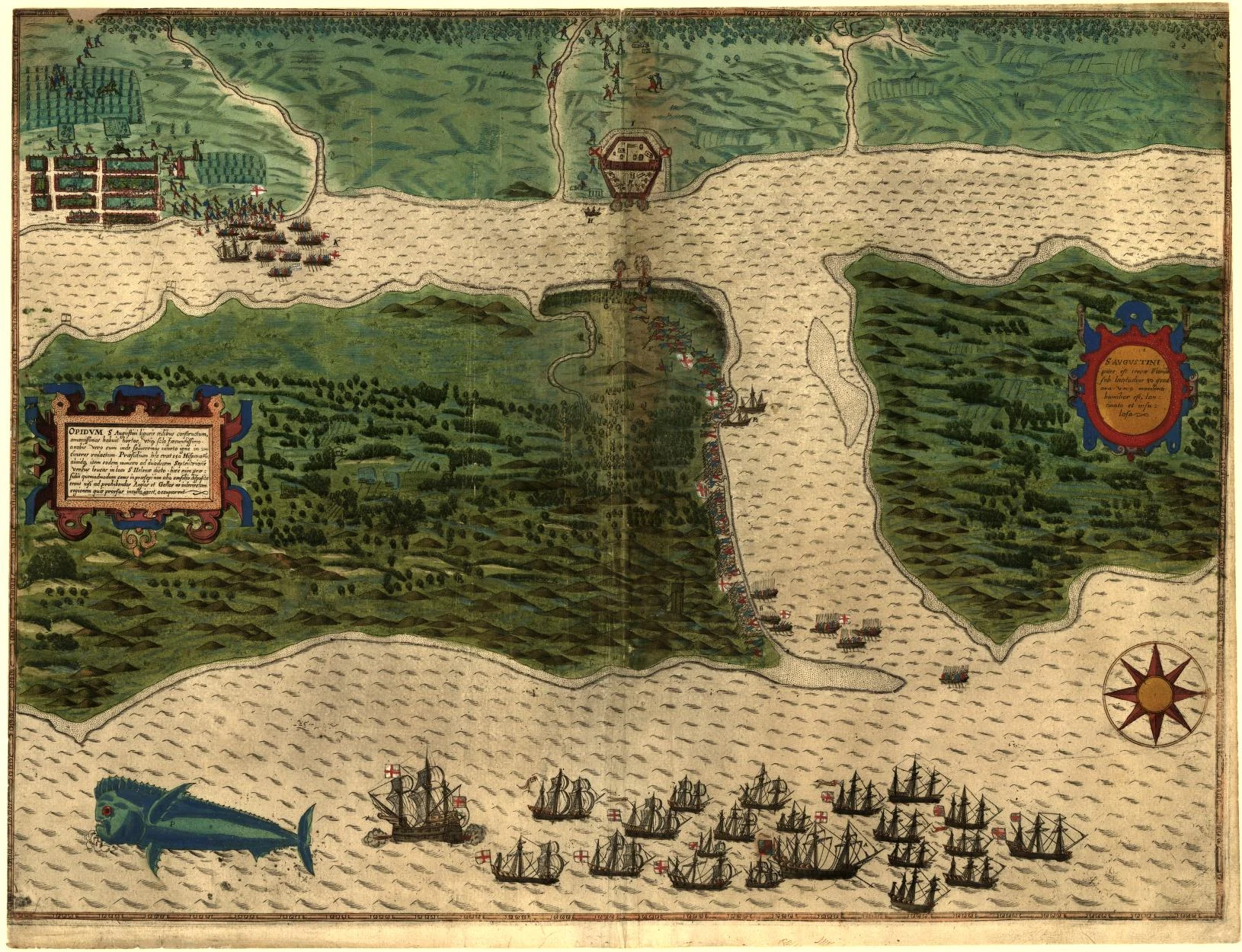
St. Augustine after its founding: Published in 1589, Boazio’s view depicts Francis Drake’s 1586 raid, not the settlement’s founding in 1565. Its coastal approach helps explain the importance of waterways. Whose military viewpoint does it present? Its geography is preserved as a historical artifact, rather than used as a modern map. Baptista Boazio, 1589; Library of Congress, Drake Collection · No known copyright restrictions; free to use and reuse (LOC). Source July 16, 1969 · Launch from Florida: Apollo 11 lifts off at Kennedy Space Center. The photograph records one moment; it cannot show all the people and systems that made the mission possible. What evidence of engineering can you point to? NASA, July 16, 1969 · Public domain, U.S. government work. Source August 24, 1992 · Measuring a dangerous storm: This radar record maps precipitation patterns near Andrew’s eye. The colors represent radar measurements, not the storm’s visible colors. How could an instrument image inform decisions differently from a ground photograph? NOAA / National Hurricane Center, August 24, 1992, 0835 UTC · Public domain, U.S. government work. Source
An ecosystem includes living things and their nonliving surroundings. Explore five habitats. In each, look for a connection between water, organisms, and human choices.
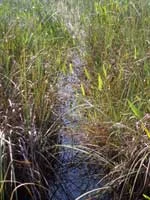
A different water neighborhood: Water among sawgrass contrasts with the tidal mangrove edge at the start of the lesson. What visual evidence suggests a wetland? A photograph alone cannot tell you the water’s salinity. National Park Service / Everglades National Park · Public domain, U.S. government work. Source
Habitat explorer Select a habitat to investigate ↓
Everglades · A slow-moving wetland
Shallow water moves through sawgrass marshes and other habitats. Small changes in elevation change which plants grow. Alligators and wading birds are part of this connected system.
Pressure: drainage and altered water flow. Think: If less clean water reaches a marsh, what could happen to fish and the birds that eat them?
Wildlife worth noticing
Manatees use warm-water refuges during cold weather. Sea turtles nest on beaches. Florida panthers need connected land habitat. Alligators live mostly in fresh water; American crocodiles in south Florida often use coastal or brackish water.
Conservation is a systems problem
Habitat loss, polluted runoff, invasive species such as Burmese pythons, and warming seas can change food webs. Protecting one species may require protecting its food, water, shelter, and movement routes.
Culture includes language, food, art, music, beliefs, celebrations, and everyday practices. No single dish, accent, or attraction represents everyone in a state.
Indigenous continuity
Seminole and Miccosukee communities maintain living traditions while participating in contemporary life. Patchwork, language, and community knowledge can tell stories of identity and adaptation. Learn from tribal museums and people speaking for their own communities.
Atlantic & Caribbean connections
Cuban and other Latin American communities have shaped Miami and Tampa. Haitian and Bahamian communities have also shaped south Florida. Food, music, languages, and neighborhood histories record journeys across water.
Stories & gathering places
Eatonville is closely associated with Zora Neale Hurston and Black cultural life. Ybor City’s cigar-making history connects work and immigration. Tarpon Springs is known for Greek heritage and sponge diving.
Work, play & creativity
Tourism, farming, fishing, shipping, aerospace, and services connect Florida to other places. Citrus, seafood, theme parks, baseball spring training, auto racing at Daytona, and visual and performing arts are parts of its public image.
Culture detective: Choose a food, song, festival, or neighborhood. Ask who created it, how it traveled, and what people from that community say it means. Avoid treating a tradition as a costume or assuming all residents share it.
05 / Famous people & their impact
Floridians by birth, choice, and contribution
Someone can shape a state without being born there. For each person, identify the Florida connection and a lasting contribution.
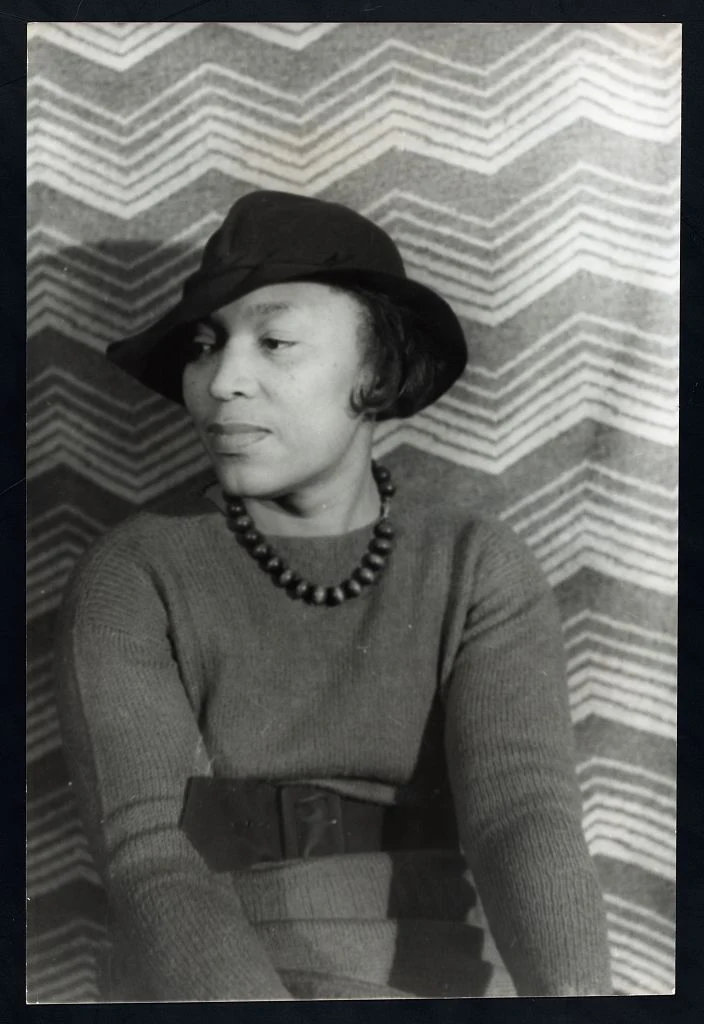
Listening as research: A 1938 portrait of Hurston. A portrait records appearance and presentation; use her writing and recordings to investigate how she documented community voices. Carl Van Vechten, 1938; Library of Congress · No known restrictions on publication (LOC). Source
VOICE & STORY
Zora Neale Hurston
Writer & folklorist · Grew up in Eatonville. Her novels and collections of folklore preserved and celebrated Black voices. How can listening be a form of research?
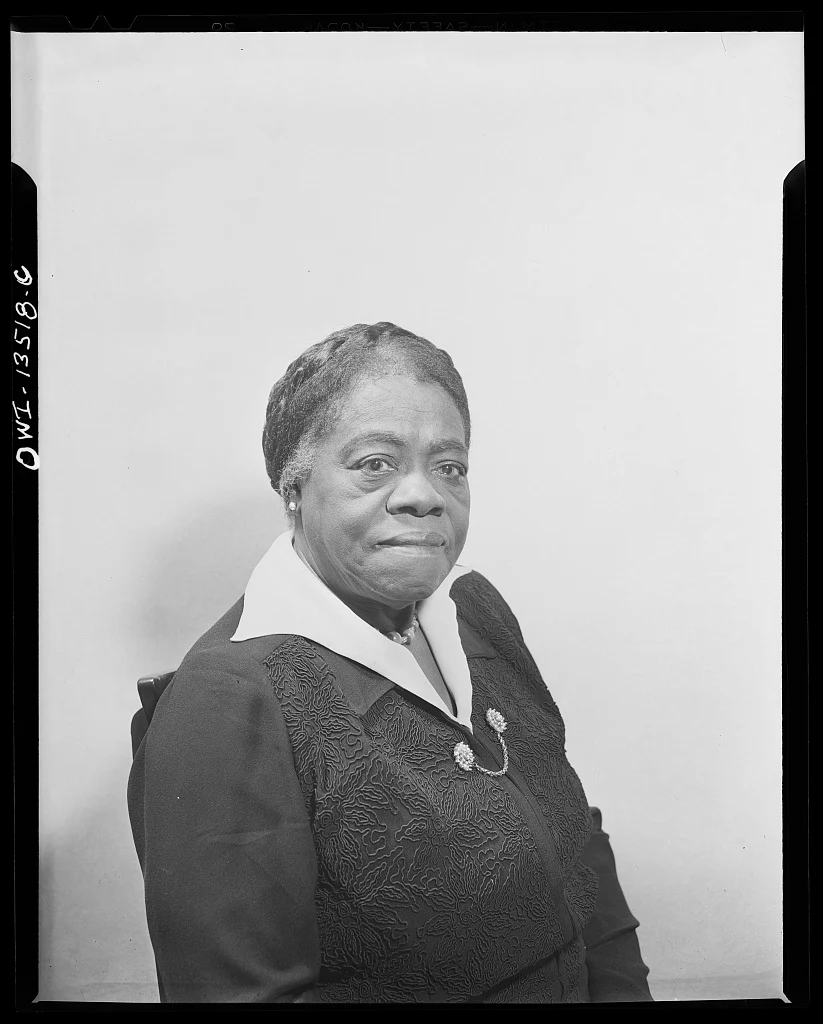
Florida Artists Hall of Fame Education and public leadership: Parks photographed Bethune in 1943. Pair this portrait with the school’s history: what evidence would reveal her work beyond a formal image? Gordon Parks / Office of War Information, 1943; Library of Congress · Public domain, U.S. government work. Source
EDUCATION & RIGHTS
Mary McLeod Bethune
Educator & civil rights leader · Founded a Daytona Beach school in 1904. Her school helped create educational opportunities for Black students and became part of today’s Bethune-Cookman University.
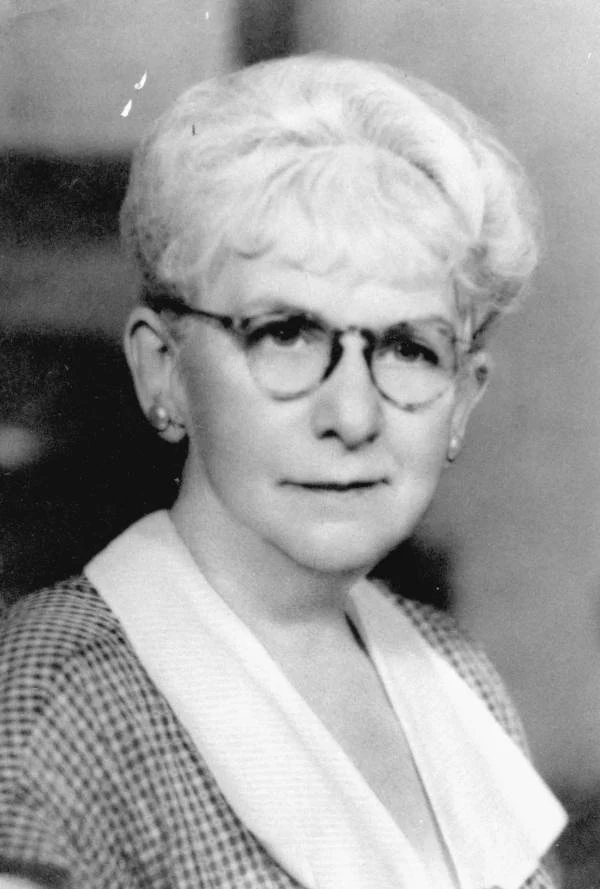
NPS biography Writing changes how people see a place: A portrait of Douglas. Connect this activity to her advocacy for the Everglades; her impact requires evidence from her writing and public work. State Archives of Florida, Florida Memory · Public domain in the United States, Florida Photographic Collection. Source
WATER & WILDERNESS
Marjory Stoneman Douglas
Writer & conservation advocate · Made south Florida her home. Her 1947 book The Everglades: River of Grass helped people see wetlands as valuable living systems.
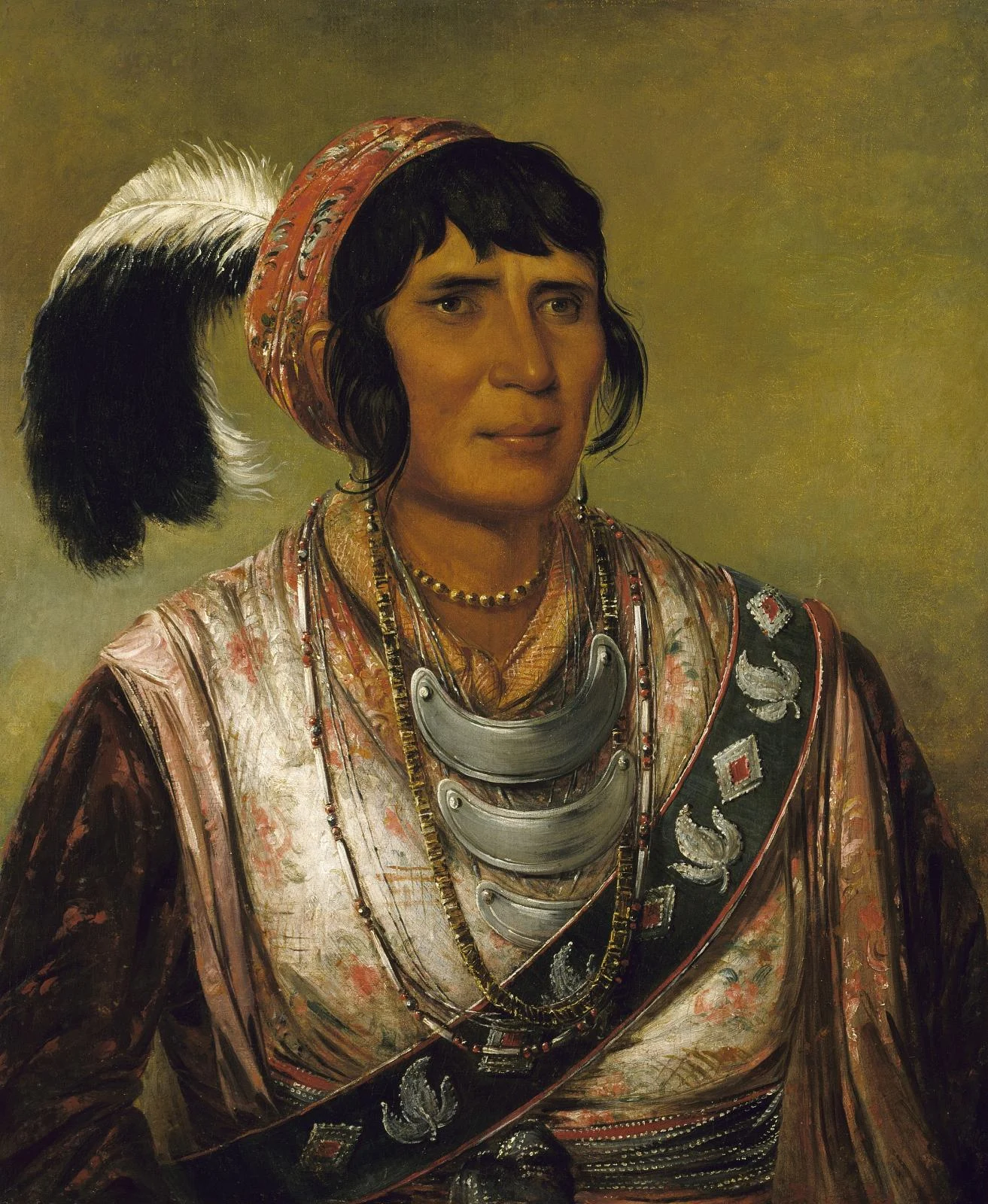
NPS biography A portrait during captivity: Catlin painted Osceola in 1838 while he was imprisoned at Fort Moultrie, after being captured under a flag of truce. The image reflects an artist’s choices. What can it show, and what requires Seminole testimony or other records? George Catlin, 1838; Smithsonian American Art Museum, 1985.66.301 · Public domain (Smithsonian). Source
HOMELAND & RESISTANCE
Osceola
Seminole resistance leader · Fought forced removal. His story connects Florida to national questions about sovereignty, treaties, and power. Read it alongside Seminole accounts, rather than treating one leader as the whole history of a people.
Place: Label Florida on a map and explain one connection between geography and human activity.
Time: Pick three timeline events. Write a cause or consequence for each.
Nature: Draw a food chain from one habitat. Predict how one environmental change might affect it.
People: Choose one person or community. Record a contribution and a source supporting your description.
Claim: Answer the guiding question with two pieces of evidence from different sections.
Class debate: a growing coastal town
A fictional town wants a new waterfront attraction beside a mangrove habitat. Consider jobs, housing, wildlife, flood exposure, and public access. In groups representing residents, workers, scientists, and planners, propose a plan and explain one benefit, one cost, and one unanswered question. There is no single correct plan; claims need evidence.
Teacher extension & next-state comparison
For younger learners, draw and narrate a four-part postcard: place, animal, person, event. For older learners, compare a government history with a tribal or community account: whose voice is present, and whose is missing? Reuse the field notebook for future states to compare settlement, ecosystems, cultures, and shared national history.
07 / Exit ticket
Check your connections
One more thought: Explain why “Florida is just beaches and theme parks” is an incomplete description. Include one example from history and one from nature.