Industrial Design · Engineering · History of Design
Charles & Ray Eames
Charles Eames (1907–1978) and Ray Eames (1912–1988) were an American husband-and-wife design team whose furniture, films, and exhibitions treated design as a way of solving problems, not decorating them. Working together from a converted garage studio in Venice, California, they proved that a chair is a physics problem — one about a human spine, a manufacturing process, and a material — long before it's a question of style.
Who Were Charles & Ray Eames?
Charles Eames was born June 17, 1907, in St. Louis, Missouri, and studied architecture at Washington University before leaving to found his own practice. Ray Eames (born Bernice Alexandra Kaiser, December 15, 1912, in Sacramento, California) trained as a painter, studying under the abstract expressionist Hans Hofmann. The two met at the Cranbrook Academy of Art in Michigan, where Charles was teaching and Ray was a student — they married in 1941 and moved to Los Angeles, setting up a studio at 901 Washington Boulevard in Venice.
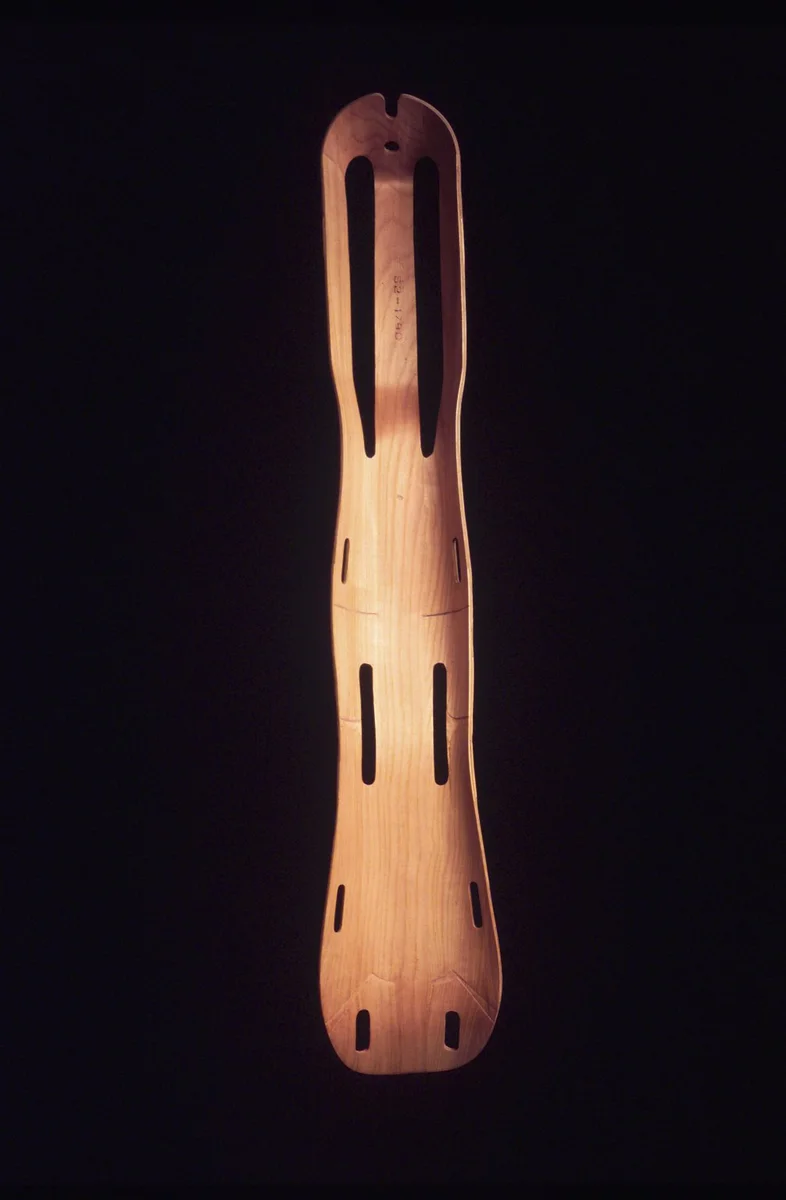
Their earliest breakthrough came from wartime necessity. During World War II, the U.S. Navy needed molded plywood leg splints for wounded sailors — flat wood cracked and metal splints didn't conform to the body. Charles and Ray built a plywood-molding machine nicknamed the "Kazam! Machine" in their apartment, using heat and pressure to bend thin plywood sheets into compound curves. The splint contract taught them how to mass-produce curved plywood forms — a skill they turned directly toward furniture once the war ended.
From the late 1940s onward, the Eames Office designed chairs, storage units, toys, and exhibitions, but also made over 100 short films exploring science, mathematics, and design for a general audience. Ray, credited as an equal designer on nearly all of the studio's output, brought a painter's eye for color, proportion, and composition to work that is often — incorrectly — remembered as Charles's alone. Charles died in 1978; Ray died exactly ten years later, on the same date, in 1988.
A Studio Built on Problem-Solving
- 1907 Charles Eames born June 17 in St. Louis, Missouri.
- 1912 Ray Kaiser (later Eames) born December 15 in Sacramento, California.
- 1930s Charles studies architecture; Ray studies abstract painting under Hans Hofmann in New York.
- 1940 Charles and Ray meet at the Cranbrook Academy of Art in Michigan.
- 1941 Marry and move to Los Angeles; set up the Eames Office studio in Venice, California.
- 1942 Build molded plywood leg splints for the U.S. Navy, mastering compound-curve plywood forming.
- 1946 Release the Eames Molded Plastic and LCW (Lounge Chair Wood) chairs, applying wartime plywood techniques to furniture.
- 1956 Debut the Eames Lounge Chair and Ottoman, designed to look and feel like a "well-used first baseman's mitt."
- 1959 Design the multimedia exhibition Glimpses of the U.S.A., shown on seven screens in Moscow.
- 1977 Release Powers of Ten, a short film scaling from the edge of the observable universe to a single proton.
- 1978 Charles Eames dies August 21.
- 1988 Ray Eames dies August 21 — exactly ten years after Charles, to the day.
Why a Chair Is a Physics Problem
The Eameses' central belief was that "design depends largely on constraints" — and a chair has real ones. A human spine isn't straight; it curves at the neck, mid-back, and lower back. Flat wood or flat metal can't follow that curve, so a rigid chair either fights the body (uncomfortable) or has to be padded thick enough to fake the shape (heavy, expensive). Molded plywood solved this by bending thin wood veneers, glued in layers with grain running in alternating directions, over a heated mold under pressure — the same lamination principle that makes plywood strong, applied to a compound curve instead of a flat sheet.
That's a materials-engineering problem wearing a furniture-shaped disguise: how do you make a thin, light material hold a complex 3D curve without cracking or springing back flat? The molded plastic and fiberglass shell chairs that followed solved the same problem a different way, using injection molding to form a single continuous curved shell in one step — no lamination, no glue joints, no seams for stress to concentrate at.
Laminating thin layers with alternating grain direction is what lets the wood bend into a double curve without splitting — the same principle that makes plywood sheets strong in the first place.
Did the Eameses invent molded plywood?
Was Ray Eames just Charles's assistant?
Visual Studies: Molded Plywood & Design Engineering
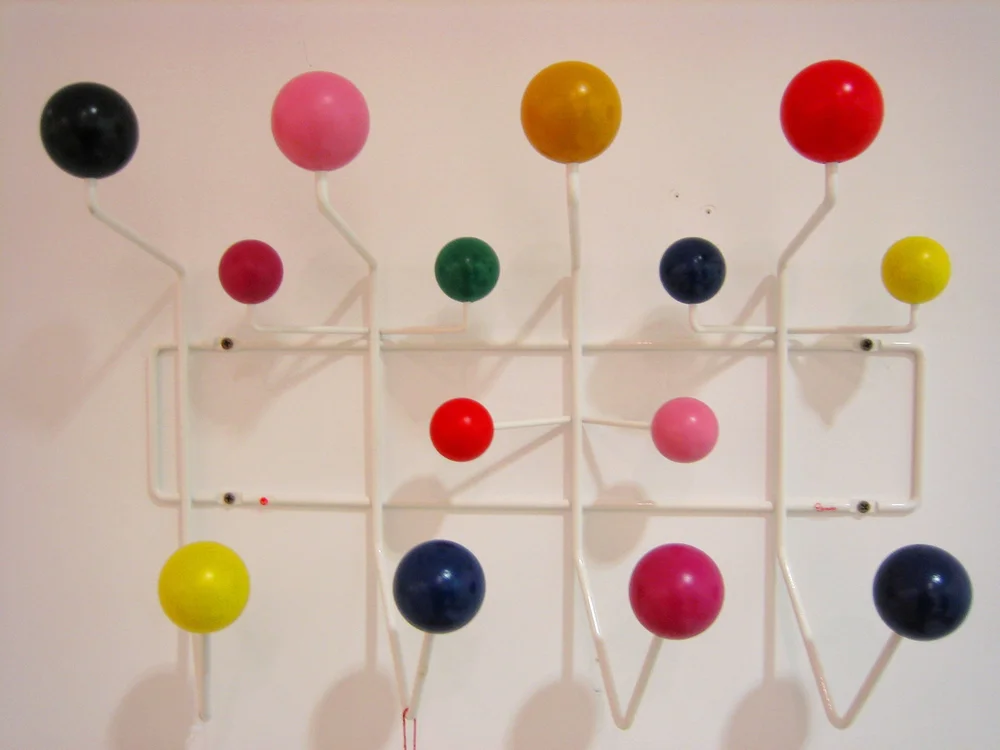
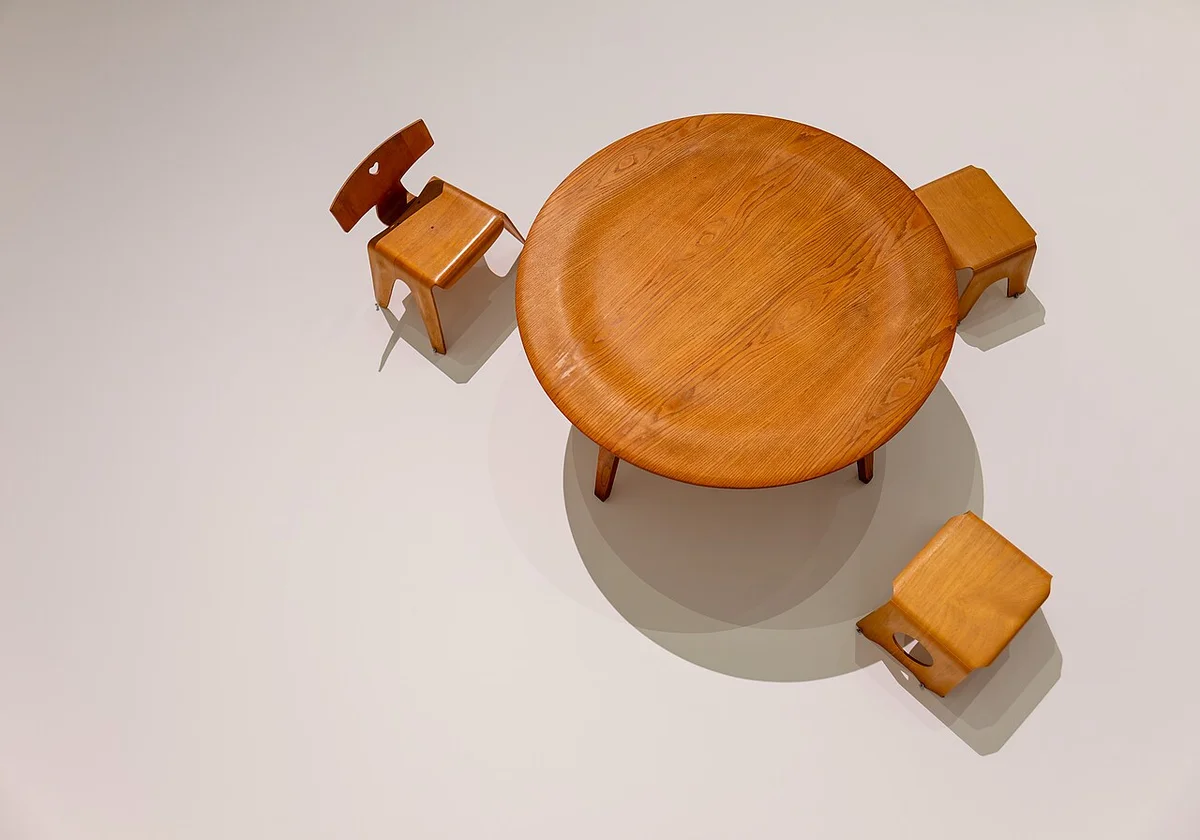
Examine how Charles and Ray Eames developed compound-curved plywood forms through rigorous experimentation with heat, pressure, and ergonomic anatomy. Select any image to enlarge it in the classroom lightbox.
The Eameses' Key Contributions
Turned wartime leg-splint techniques into mass-producible chairs that followed the curve of the human body instead of fighting it.
Made over 100 short films — including Powers of Ten — that taught scientific and mathematical ideas through visual storytelling.
Built their own Eames House largely from off-the-shelf industrial parts, proving mass-produced materials could make elegant architecture.
Designed multi-screen, multimedia exhibitions like Glimpses of the U.S.A. decades before "multimedia" was a common term.
Designed educational toys, like The Toy (a kit of panels and connectors), that taught structural thinking through play.
Popularized the idea that good design is judged by how well it solves a real constraint, not by decoration layered on afterward.
The Eameses' Legacy Today
The Eames Lounge Chair and Molded Plastic chairs are still in production today, largely unchanged from their original engineering — a rare thing in furniture, where most designs are replaced within a few years. Their approach treated every project, whether a chair, a splint, a house, or a film, as the same kind of question: what are the real constraints here, and what is the simplest form that satisfies all of them at once?
Powers of Ten is still shown in science classrooms to teach scale, and the Eames House remains a case study in architecture programs for building elegantly from ordinary industrial parts. Their central lesson for designers and engineers alike — that form should come from function, material, and the human body, not the other way around — remains a working definition of good design nearly a century later.
Practice Problems
Think about materials, constraints, and the Eameses' life and work.
Easy1. Where did Charles and Ray Eames set up their design studio?
Easy2. What wartime product first taught the Eameses how to mold plywood into compound curves?
Medium3. Plywood gets its strength from laminating thin layers with alternating grain direction. If one veneer layer is 1.5mm thick, how many layers make up a piece of plywood 9mm thick?
Medium4. What 1977 short film scales from the edge of the observable universe down to a single proton?
Challenge5. Why can't a flat, rigid piece of wood comfortably match the shape of a human spine?
Medium6. Charles Eames died in 1978. Ray Eames died in 1988, on the exact same calendar date. How many years apart did they die?
Easy7. What was unusual about the materials used to build the Eames House (Case Study House #8)?
Challenge8. What idea did the Eameses argue good design is judged by?