Strategy Games · History · How to Play

Chess: Origins and How to Play

Origins in India Six Piece Types Checkmate Win Condition

Trace chess from ancient India to the modern board, then use the interactive lab to explore piece movement, captures, check, and the goal of checkmate.

The Short Origin Story

Chess began as a war-and-strategy game in ancient India, then changed as it traveled across continents and centuries.

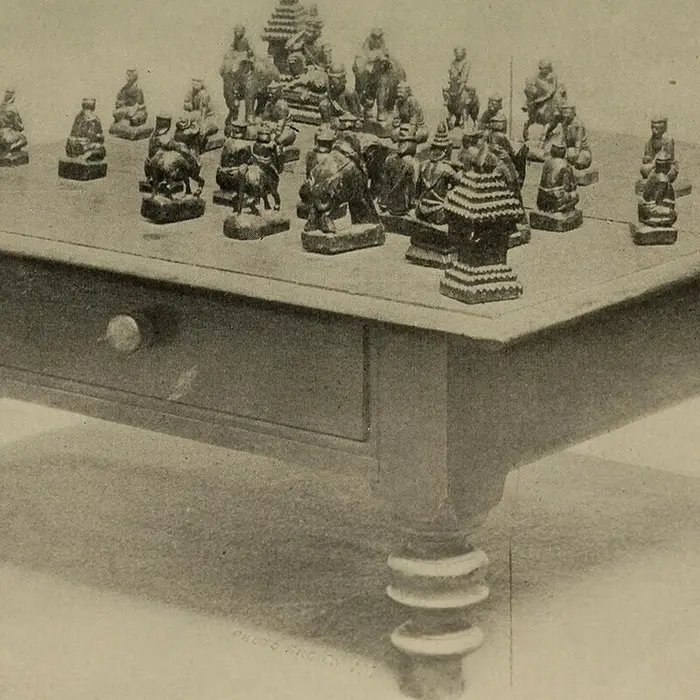
  • India — c. 6th century CE: An ancestor called chaturanga appears, representing infantry, cavalry, elephants, and chariots.
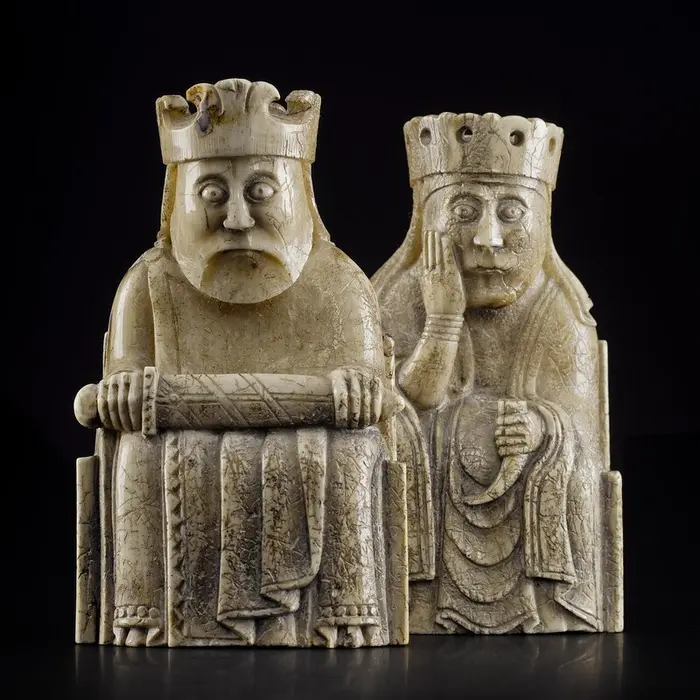
  • Persia: The game becomes shatranj. The words check and checkmate descend from Persian and Arabic roots.
  • Islamic world & Europe: The game spreads along trade, scholarship, and conquest routes over several centuries.
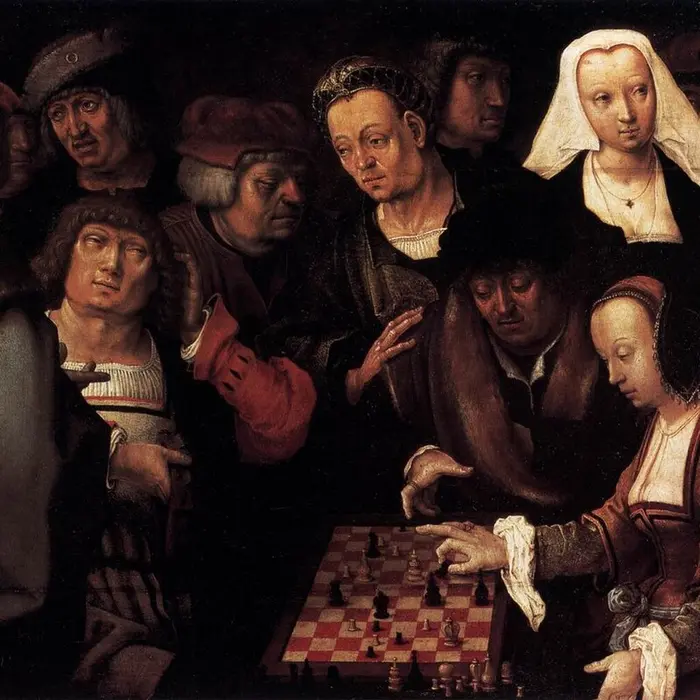
  • Late medieval Europe: The queen and bishop gain long-range movement, creating the fast, tactical game we play today.

Starting Position

Back rank
♜ ♞ ♝ ♛ ♚ ♝ ♞ ♜
Pawns
♟ ♟ ♟ ♟ ♟ ♟ ♟ ♟

White's queen starts on a light square. Black's queen starts on a dark square. Memory trick: queen on her own color. The board corner nearest White's right hand is always a light square.

Piece Movement Lab

Pick a piece, then click any square to reposition it. Green dots show legal moves. Red rings show capture squares.

The queen combines rook and bishop: any number of squares straight or diagonal.

How a Turn Works

White moves first. Players alternate. Each turn is one legal move by one piece.

1 · Move

Move one piece legally. Pieces cannot jump over each other — except the knight, which is the unique exception.

2 · Capture

Move onto an enemy piece's square to capture it. Pawns move forward but capture diagonally — the most unusual rule.

3 · Protect the King

You may never leave your own king in check. If attacked, you must move the king, block the attack, or capture the attacker.

Three Moves Worth Knowing

These special cases come up in almost every game. Knowing them early prevents surprises.

Castling The king and rook move in a single turn — the king slides two squares toward a rook, and the rook jumps to the other side. Used to protect the king and activate the rook. Only legal if neither piece has moved yet, and the king is not in check.
En Passant When a pawn uses its two-square first move to land beside an enemy pawn, the enemy pawn may capture it as if it had only moved one square. The capture must happen immediately on the next turn or the right expires.
Promotion When a pawn reaches the far edge of the board it becomes any piece the player chooses — almost always a queen. Promotion is a powerful threat that shapes endgame strategy.

Six Famous Openings

The first few moves set the whole game's character. These openings have been studied for over a century and still appear at the top level today.

Italian Game 1. e4 e5 2. Nf3 Nc6 3. Bc4 One of the oldest recorded openings. White's bishop aims straight at f7, the weakest square in Black's camp, and both sides develop quickly.
Ruy Lopez (Spanish) 1. e4 e5 2. Nf3 Nc6 3. Bb5 The most deeply analyzed opening in chess history, named for a 16th-century Spanish priest. White pressures the knight that defends Black's e5 pawn.
Sicilian Defense 1. e4 c5 Black's most popular reply to 1.e4 at every serious level. It creates an unbalanced, asymmetrical fight instead of a mirrored center.
French Defense 1. e4 e6 Black builds a solid pawn chain and accepts a slightly cramped position early in exchange for a structure that is very hard to attack.
Queen's Gambit 1. d4 d5 2. c4 White offers a wing pawn to pull Black's d-pawn out of the center. Black almost never keeps the free pawn — it's rarely a gambit in practice.
King's Indian Defense 1. d4 Nf6 2. c4 g6 Black lets White build a big pawn center, then counterattacks it later with pawn breaks and a fianchettoed bishop on g7.

What Is a Blunder — and How to Avoid One

What Counts as a Blunder

A blunder is a move that throws away a large amount of material, the game, or a winning position — much worse than a normal inaccuracy. Even world champions blunder under pressure. Common types include:

  • Hanging a piece: moving to, or leaving a piece on, a square an enemy piece can simply capture for free.
  • Missing a tactic: walking into a fork, pin, or skewer that wins material.
  • Ignoring a threat: making your own plan while the opponent's last move set up checkmate or a winning capture.
  • The overloaded defender: moving a piece that was the only thing guarding something else.

The CCT Habit

Before playing any move, scan for Checks, Captures, and Threats — yours and your opponent's. This one habit prevents most blunders.

1 · Checks

Can either king be put in check right now, by either side?

2 · Captures

What can be captured on the board — including the piece you're about to move?

3 · Threats

What did your opponent's last move threaten? Answer that before starting your own plan.

Slow down in time pressure and after your opponent's move especially — that is when most blunders happen.

World Championship Eras

An unbroken lineage of champions stretches back to 1886 — one of the longest continuous title lines in any sport or game.

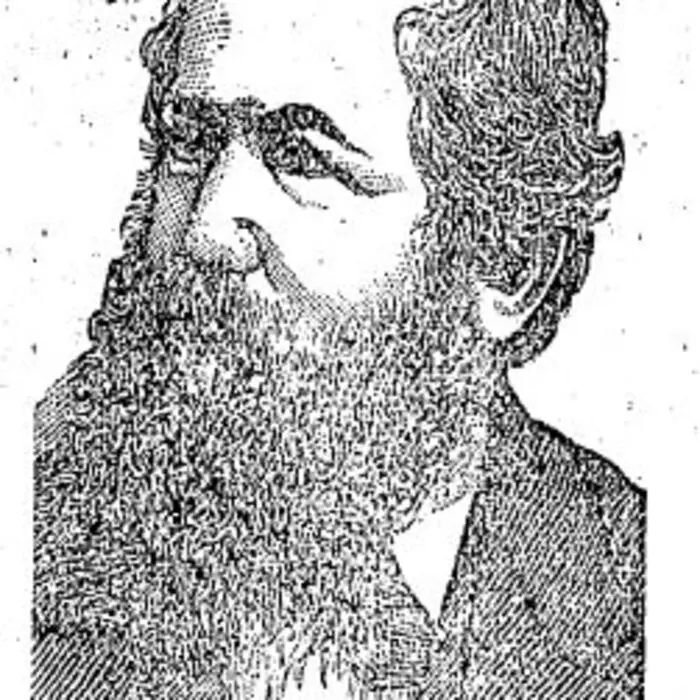
  • 1886 — Wilhelm Steinitz: Becomes the first officially recognized World Champion, holding the title for eight years.
  • 1894–1921 — Emanuel Lasker: Holds the title for 27 years, the longest reign of any World Champion.
  • 1927 — Alexander Alekhine: Defeats José Raúl Capablanca in a marathon 34-game match in Buenos Aires.
  • 1948 — Mikhail Botvinnik: Wins a tournament to fill the title after Alekhine's death, opening decades of Soviet dominance.
  • 1972 — Bobby Fischer: Defeats Boris Spassky in Reykjavik — the Cold War "Match of the Century" — ending 24 years of Soviet control of the title.
  • 1985 — Garry Kasparov: Becomes champion at 22 after a legendary rivalry with Anatoly Karpov, then the youngest champion ever.
  • 2013 — Magnus Carlsen: Defeats Viswanathan Anand and begins a decade of dominance, later becoming the highest-rated player in history.
  • 2023 — Ding Liren: Wins the title after Carlsen declines to defend it, defeating Ian Nepomniachtchi in tiebreaks.
  • 2024 — Gukesh Dommaraju: Defeats Ding Liren at age 18, becoming the youngest undisputed World Champion in history.

The Current World Championship

As of August 2026, the World Championship title and the next challenge to it look like this:

Defending Champion Gukesh Dommaraju India · Won the title in 2024
VS
Challenger Javokhir Sindarov Uzbekistan · 2026 Candidates winner
Their match is scheduled for November 25 – December 15, 2026 in Geneva, Switzerland. Source: Wikipedia, World Chess Championship 2026.

Chess Across Time

The board stayed recognizable for fifteen centuries. The rules evolved into a faster, sharper game.

Archival photograph of an ornate antique Indian chess set with figural pieces including elephants and seated rulers
c. 6th century Chaturanga

An Indian war game with infantry, cavalry, elephants, chariots, and a ruler — echoed in today's six piece types.

Photograph of the Lewis Chessmen, a famous medieval carved ivory chess set
7th–10th centuries Shatranj

Persian and Arabic scholars preserve, study, and spread the game. The words check and checkmate enter European languages.

The Game of Chess, a 1508 painting by Lucas van Leyden showing well-dressed figures watching a woman play chess
15th century Modern Power

The queen and bishop gain long-range movement, making attacks far quicker and the opening phase much more critical.

Portrait engraving of Wilhelm Steinitz, the first official World Chess Champion
19th century onward Standard Play

Wilhelm Steinitz became the first official World Champion in 1886. Clocks, tournaments, and eventually computer chess shaped the modern game and its global community.

Photo credits: Antique Indian chess set (1898, no known restrictions) · Lewis Chessmen (National Museums Scotland, CC BY-SA 4.0) · The Game of Chess (Lucas van Leyden, 1508, public domain) · Wilhelm Steinitz (1886, public domain), all via Wikimedia Commons.

The Anatomy of Checkmate: Evaluating the CPR Escapes

Walk through a concrete endgame position to understand why a king is declared checkmated and why no further moves are permitted.

Position: White Queen on g7, White Bishop on c3, Black King trapped on h8

White plays Qg7#. The Black king on h8 is attacked by the Queen. How do we prove this position is terminal checkmate rather than merely check?

  1. Test 1: Can Black Capture the attacking piece (C)?
    The king is adjacent to g7 and could physically reach it. However, the Queen is protected by White's Bishop on c3 along the diagonal. Because moving into check is strictly illegal under chess rules, the king cannot capture the queen. No other Black piece can reach g7. Therefore, capture is impossible.
  2. Test 2: Can Black Protect by blocking the attack line (P / Interpose)?
    Because the Queen is directly adjacent to the King (distance = 1 square), there are zero intervening squares between the attacker and the king. As a result, no piece can be interposed.
  3. Test 3: Can Black Run the king to safety (R / Move)?
    The King's only open adjacent square is g8. However, g8 is also attacked by the Queen on g7. Therefore, the king has no legal retreat squares.
  4. Conclusion: Because all three escape avenues (Capture, Protect, Run) fail simultaneously, the king cannot escape check. Consequently, this state is defined as checkmate, which means White wins immediately.

Self-Check Question

What is the difference between Checkmate and Stalemate, and why does stalemate result in a draw rather than a loss?

Show Answer & Rule Logic

Answer: In checkmate, the king is under direct check and has no legal escapes. In stalemate, the king is NOT in check, but the player has no legal moves anywhere on the board. Because chess rules forbid voluntarily moving into check, but also mandate making a move on your turn, the game cannot continue. Therefore, it is ruled a draw (tie) rather than a defeat.

Sources & Further Reading

Authoritative historical and anthropological treatises on the lineage of chess from chaturanga to international competition.

  • Murray, H. J. R. A History of Chess. Oxford University Press (1913). The landmark 900-page scholarly text detailing chess variants across ancient India, Persia, and the Islamic world.
  • Davidson, Henry A. A Short History of Chess. Greenberg, New York (1949). Traces the linguistic evolution of piece names from Sanskrit chaturanga to Persian shatranj and European chess.
  • Yalom, Marilyn. Birth of the Chess Queen: A History. HarperCollins (2004). Investigates the late 15th-century transformation of the slow firz (vizier) into the omnipotent Queen in Renaissance Europe.