Chemistry pioneer · Measurement · Combustion
Lavoisier and the weight of a reaction
Antoine Lavoisier helped turn chemistry from a vocabulary of invisible substances into a quantitative science. Investigate the claim that matter is rearranged, not destroyed.
Predict: If a metal gains mass while heating in air, where did the extra mass come from?
1. From phlogiston to measured oxygen
- Many European chemists explain burning with an invisible “principle of fire” that supposedly leaves a substance.
- He begins weighing metals, air, and reaction vessels together, making the system harder for an invisible substance to escape.
- Joseph Priestley isolates a gas that strongly supports combustion. Carl Wilhelm Scheele makes the same gas independently.
- Lavoisier names oxygen, explains combustion as combination with part of air, and argues that total mass is conserved.
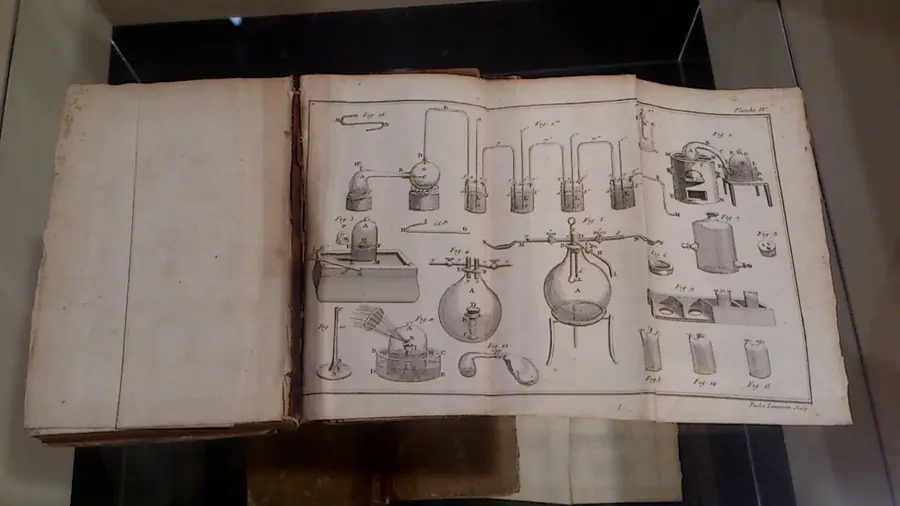
- Traité élémentaire de chimie presents a new vocabulary and treats the balance as a central instrument of chemistry.
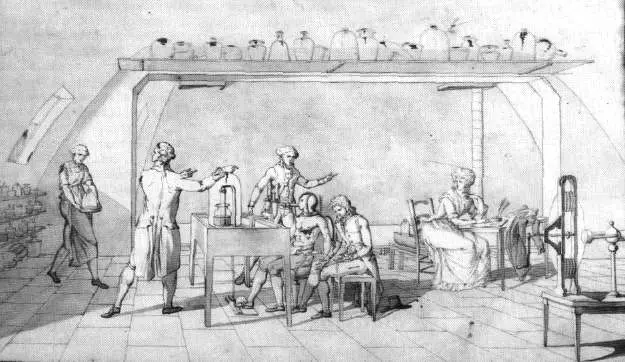
2. Look closely at the people and apparatus
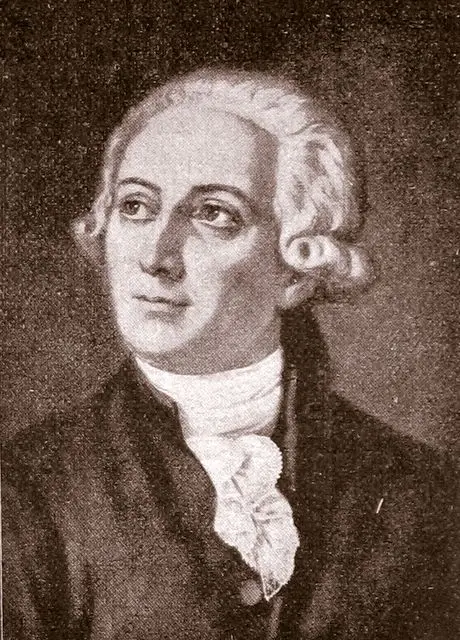
A pioneer is not a lone hero. Priestley and Scheele supplied crucial observations; Marie-Anne Paulze Lavoisier translated, illustrated, and documented the work; assistants and instruments made the measurements possible.



3. Test conservation of mass
In a sealed vessel, 12.0 g of carbon reacts with 32.0 g of oxygen. What mass of product must be present if no material escapes?
Model limit: This arithmetic demonstrates conservation; it does not reproduce a furnace experiment. Real measurements include balance uncertainty, leaks, and impurities.
4. History needs context
Lavoisier's scientific influence was enormous, but his work existed within a network of collaborators and predecessors. He was executed during the French Revolution in 1794; that political event is not evidence for or against his chemistry. Ask students to separate a person's historical circumstances from the evidence supporting a scientific claim.
- Claim: In a closed reaction, total mass stays constant.
- Evidence: Before-and-after measurements include every reactant and product.
- Reasoning: Atoms can be rearranged without being created or destroyed in this model.
Sources: Encyclopaedia Britannica: Lavoisier · Science History Institute.